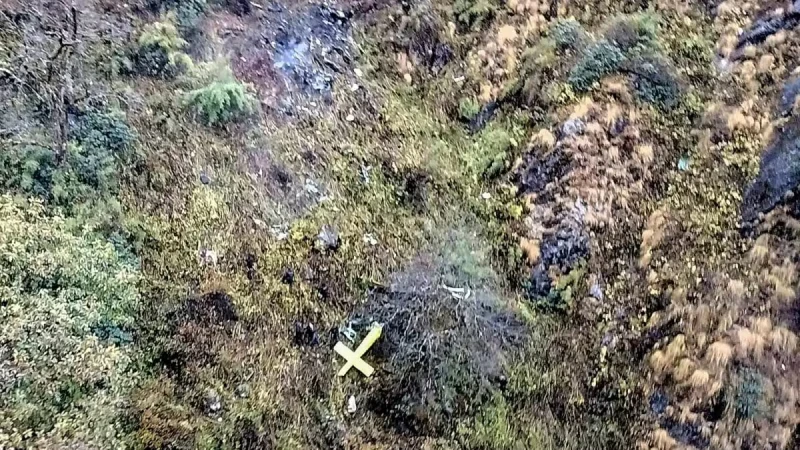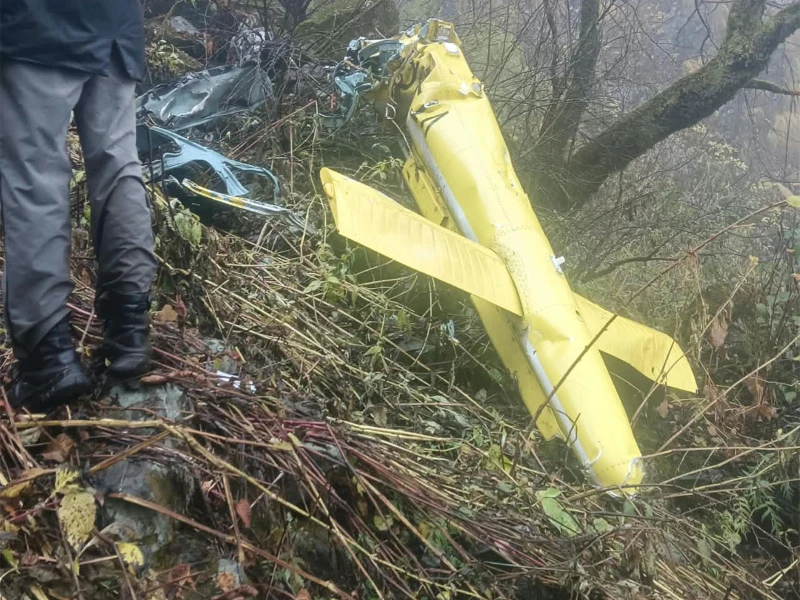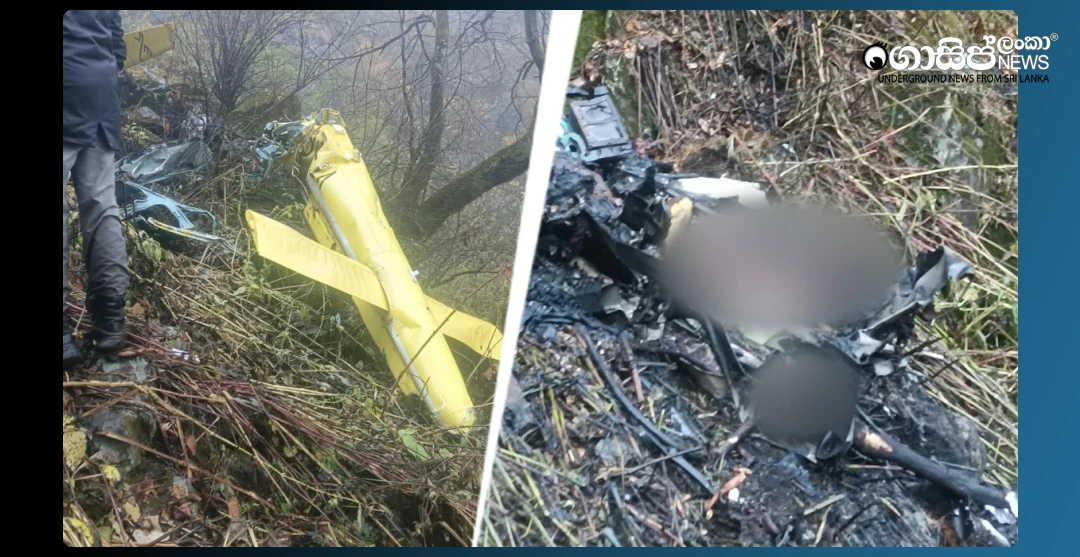
Six people on board a private helicopter flying from Badrinath to Dehradun in Uttarakhand state, India, were killed when it crashed into a hillside in the Joshimath (Jyotirmath) area. In this tragedy, which occurred on the afternoon of Friday, October 30, the pilot and five passengers died at the scene of the accident.
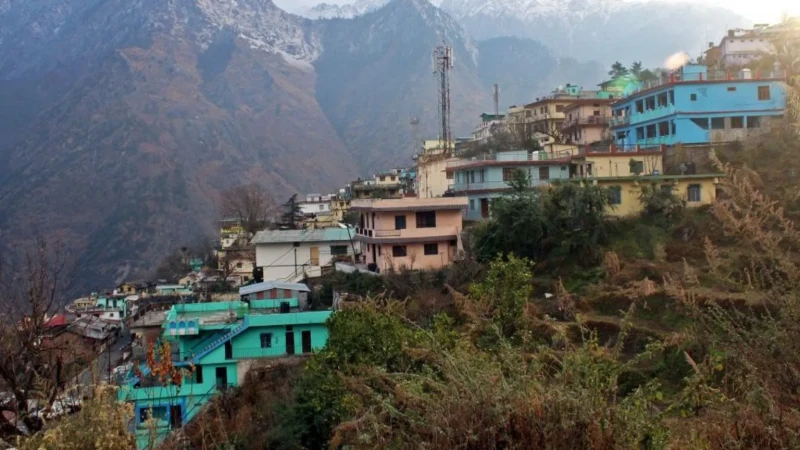
This Airbus AS350B3 helicopter, bearing registration 'VT-HCX' and belonging to Trans Bharat Aviation, departed from Badrinath Civil Helipad between 1:12 PM and 1:14 PM that day, with the aim of reaching Sahastradhara Helipad in Dehradun. However, within minutes of taking off, while flying over the Joshimath valley, communication with the aircraft was completely lost. A team from the Army Signal Corps stationed in the Hathi Parvat area observed smoke emanating from the aircraft as it rapidly descended.
Search operations began around 2:20 PM after the accident was officially reported, and by approximately 3:30 PM, an army team from the mountain brigade reached the forest area near the J.P. Power Plant and Marwari Bridge, close to Chai village where the accident occurred. They confirmed that all six occupants of the aircraft had died. Due to extreme darkness and difficult terrain conditions, the recovery of the bodies was delayed, and arrangements were made for post-mortem examinations to be conducted the following day in Joshimath.
No women or children were involved in this journey, and all five deceased passengers were residents of Karnataka state, specifically the Bengaluru area. Among the group of friends who had gathered for the 'Char Dham' pilgrimage was 44-year-old Arun Salunke, an inspector with the Central Crime Branch (CCB) of Bengaluru Police. He was a dedicated officer from the 2007 batch. Additionally, the victims included 51-year-old H.S. Nataraja, head of Vidya Bharati Educational Institute; 39-year-old Shankargouda V.B., a lawyer from Bengaluru; and 41-year-old Pratapa Bachihalli, a businessman and father of two. Sudhir K., aged between 49 and 50, was also part of this group. The helicopter was piloted by 48-year-old Captain Himanshu Sabharwal, a resident of South Delhi.
Although the exact cause of the accident has not yet been definitively confirmed, severe attention has been drawn to adverse weather conditions. At the time of the accident, the area was experiencing dense clouds and heavy rainfall, with reports of potential snowfall. The Indian Meteorological Department had also issued an 'Orange' alert for the Chamoli district regarding thunderstorms, lightning, and winds blowing at speeds of 40-50 km per hour.
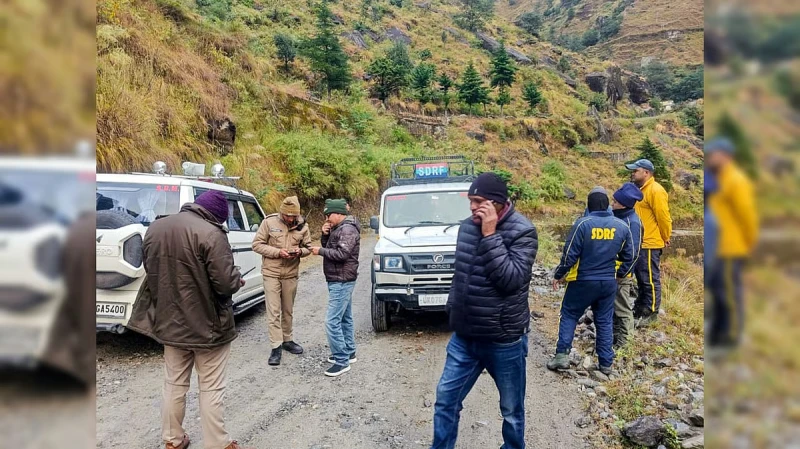
Following this incident, all helicopter flights belonging to Trans Bharat Aviation have been temporarily suspended as a safety measure. The Ministry of Civil Aviation has dispatched a special team for this purpose, and the Aircraft Accident Investigation Bureau (AAIB) has also launched a comprehensive investigation. The Army, Chamoli Police, State Disaster Response Force (SDRF), and District Administration jointly launched search operations, utilizing a drone from the Gopeshwar area. Uttarakhand Chief Minister Pushkar Singh Dhami expressed his profound sorrow over this tragedy and instructed that a comprehensive investigation covering all aspects be conducted, and full support be provided to the victims' families.
The helicopter service is extremely popular among Char Dham pilgrims as it allows them to reach their destination in an hour, instead of traversing a difficult road stretching over 300 kilometers. Since April this year, over 2.1 million devotees have visited Badrinath, and 87 deaths due to various reasons have been reported this season. However, the history of helicopter travel in this region is risky. According to data from the Aircraft Accident Investigation Bureau, 8 air accidents and one serious incident have been reported between 2015 and 2025, with at least one accident occurring every year since 2022. Against the backdrop of previous fatal accidents, such as the helicopter crash in Kedarnath in 2022 that killed 7 people, and other fatal accidents in 2025, this latest tragedy once again highlights the severe risks of flying in high-altitude mountainous terrain.