![Gossip Lanka News [English]](https://blogger.googleusercontent.com/img/a/AVvXsEhYm2aFFq-bIW1nWX-RrqnPFoIsVos6_VCVz8BpLt0QJi55GNXHXC2fugeRvL0qUStEuCfs7Sfu6ZiSlhrkldxfGuE_wzy5gitY6rMZ2KSi8VBbGvkgXLks37RwZV-4-HKbWiNLRxB8C_r1e4z3mpxFTMPDJPEADoG8E-bZteWFipeD5KNGbjvCfqEfKw=s300 "Gossip Lanka News [English]")
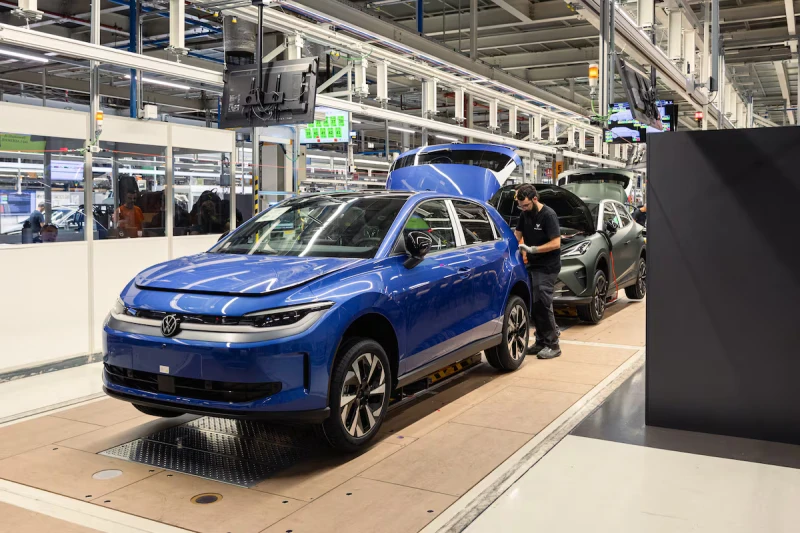
In the face of intense competition from Chinese car manufacturers, the Supervisory Board of Volkswagen has approved a massive restructuring plan to secure its future survival and competitiveness. According to this new plan, 50,000 jobs are to be cut by 2030, which is in addition to another 50,000 employee layoffs approved from late 2024 to date.
Additionally, it has been officially announced that the company cannot guarantee the future operations of four factories located in the German cities of Emden, Zwickau, Hanover, and Neckarsulm between 2031 and 2034, and that alternative uses for these factories are currently being explored.According to the announcement released by the company, they currently have a massive excess production capacity of approximately 500,000 vehicles per year. To overcome this challenge, the company has decided to reduce its product diversity by 50% and supply complexity by about 75%. With the aim of minimizing costs by producing a larger number of vehicles under fewer models, they intend to focus primarily on attractive and high-tech vehicles. Due to this new strategy, the survival of older brands like 'Seat', which have no definite plans for introducing new models for the next few years, is at severe risk, while the company's main focus has shifted towards brands like 'Cupra'.
For this deepest strategic change in the company's history, named "Future 2030" (Plan Futuro 2030), full unanimous approval has been granted after long discussions by both the trade unions and the state government of Lower Saxony, Germany, a major shareholder of the company. Volkswagen CEO Oliver Blume has stated that this decision is a very positive step for the company's future and that billions of investments will be made in the coming years to strengthen its brands. Concurrently, Christiane Benner, Vice President of the IG Metall trade union, and Olaf Lies, Minister-President of the state of Lower Saxony, have also emphasized the importance of this common agreement reached to face international competition during this critical period.
Through this comprehensive plan, the company aims to achieve an operating result of 31 billion Euros and a profit margin of 9% by 2030, and also plans to invest 135 billion Euros in research and development activities between 2027 and 2031. Competing with Chinese companies for electric vehicles in markets like Europe, and rebuilding their lost market share in China, where Volkswagen traditionally dominated, have become key factors in this entire process. Concurrently, the company is also taking steps to expand its export business to countries in the Global South.