![Gossip Lanka News [English]](https://blogger.googleusercontent.com/img/a/AVvXsEhYm2aFFq-bIW1nWX-RrqnPFoIsVos6_VCVz8BpLt0QJi55GNXHXC2fugeRvL0qUStEuCfs7Sfu6ZiSlhrkldxfGuE_wzy5gitY6rMZ2KSi8VBbGvkgXLks37RwZV-4-HKbWiNLRxB8C_r1e4z3mpxFTMPDJPEADoG8E-bZteWFipeD5KNGbjvCfqEfKw=s300 "Gossip Lanka News [English]")
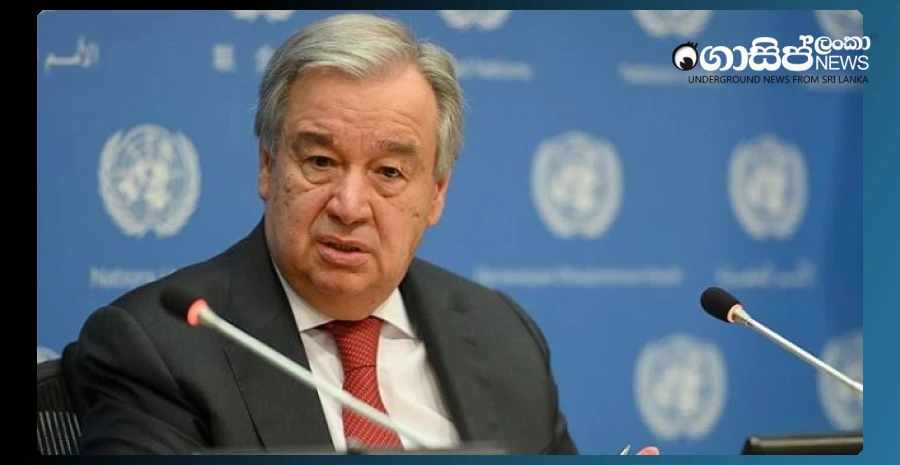
UN Secretary-General António Guterres warns that the world has entered a "danger zone" with extreme weather disasters, and the global impact of the El Niño phenomenon has already begun. According to the latest data released by the World Meteorological Organization (WMO), this El Niño event could be the strongest recorded in over 70 years and is likely to last until at least February 2027.
In addition to increasing global temperatures due to human-induced climate change, El Niño causes further temperature rises in some areas, while some regions face severe droughts and others experience strong storms and floods.Sea surface temperatures in the central and eastern tropical Pacific Ocean have risen by more than 2 degrees Celsius above average in recent weeks, and it is predicted that they could increase by nearly 4 degrees Celsius above average in the future. There is a risk that this could become the strongest El Niño event recorded since 1950, with subsurface temperatures in the Pacific Ocean rising by more than 8 degrees Celsius above average in some places. Representatives of the World Meteorological Organization state that this situation could have a severe impact on global communities and economies, and steps have been taken to efficiently disseminate weather warnings to the public.
Sea temperatures in the Indian Ocean, tropical Atlantic Ocean, and around the Australian coast have also risen, with the southern parts of Australia being severely affected by marine heatwaves. Low rainfall is predicted for Southeast Asia, Central America, and the northern parts of South America, increasing the risk of drought and wildfires. Due to reduced rainfall, measures have been taken to limit the number of ships passing through the Panama Canal by more than 10%, and artificial rain-making aircraft have been deployed to control wildfires that have burned over 107,000 hectares in Indonesia.
China expects to face seven typhoons this year due to the El Niño effect, with several people dying from storms Bavi, Noul, and Maysak in July, and over a million people being evacuated due to Typhoon Dolphin in August. Eastern Africa, Southern Brazil, and the southern parts of the United States face an increased risk of floods with higher rainfall, while Peru is facing a severe risk of landslides and floods. Peru's early warning systems have been strengthened, and the United States has arranged to send the 'USNS Comfort' vessel to its coast to provide medical and technical assistance when El Niño reaches its peak.