![Gossip Lanka News [English]](https://blogger.googleusercontent.com/img/a/AVvXsEhYm2aFFq-bIW1nWX-RrqnPFoIsVos6_VCVz8BpLt0QJi55GNXHXC2fugeRvL0qUStEuCfs7Sfu6ZiSlhrkldxfGuE_wzy5gitY6rMZ2KSi8VBbGvkgXLks37RwZV-4-HKbWiNLRxB8C_r1e4z3mpxFTMPDJPEADoG8E-bZteWFipeD5KNGbjvCfqEfKw=s300 "Gossip Lanka News [English]")
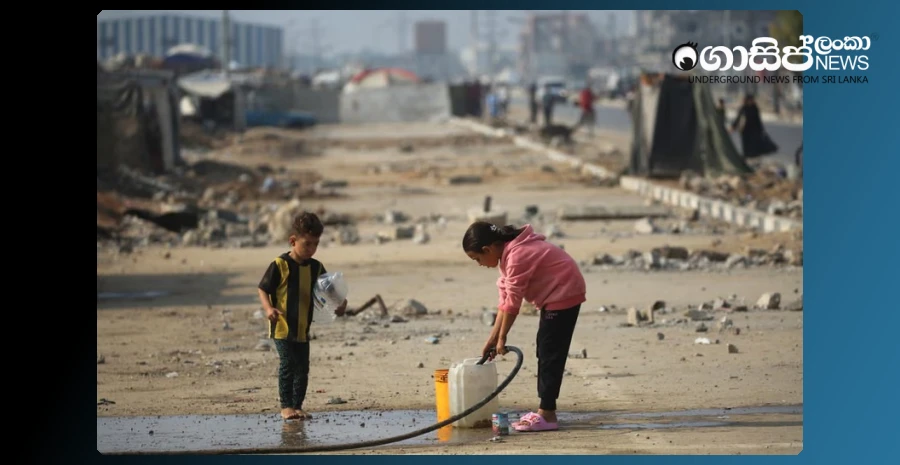
Due to Israel's attacks on wastewater treatment plants in the Gaza Strip, Israel itself is now facing a severe water shortage. With the destruction of infrastructure in Gaza, a large amount of untreated wastewater is flowing into the Mediterranean Sea, leading to an unusual growth of algae in the seawater.
This layer of algae, spreading over a distance of approximately 60 miles, has severely disrupted Israel's water desalination capacity. Microalgae, nourished by nutrients like nitrogen and phosphorus contained in the wastewater, have clogged the filters of five out of Israel's six main desalination plants. As a result, these plants had to be shut down for several days and are currently operating at reduced capacity. On the other hand, the situation in the Gaza Strip has become extremely tragic, with its people suffering from a severe water and health crisis. Reportedly,
Approximately 90% of Gaza's water and sanitation infrastructure has been completely destroyed due to Israeli bombing attacks since October 7, 2023. As a result, about 45,000 cubic meters of untreated raw sewage flow directly into the Mediterranean Sea daily, while another 15,000 cubic meters seep into groundwater. Due to this infrastructure destruction, displaced Gazans are forced to live near sewage ponds and garbage heaps without proper water supply, and gastrointestinal diseases, diarrhea, and skin diseases are rapidly spreading among young children. Furthermore, this environmental catastrophe has led to an unprecedented increase in the rat population not only in the Gaza Strip but also in Israeli communities near the border, with environmentalists pointing out that pollution knows no political boundaries.