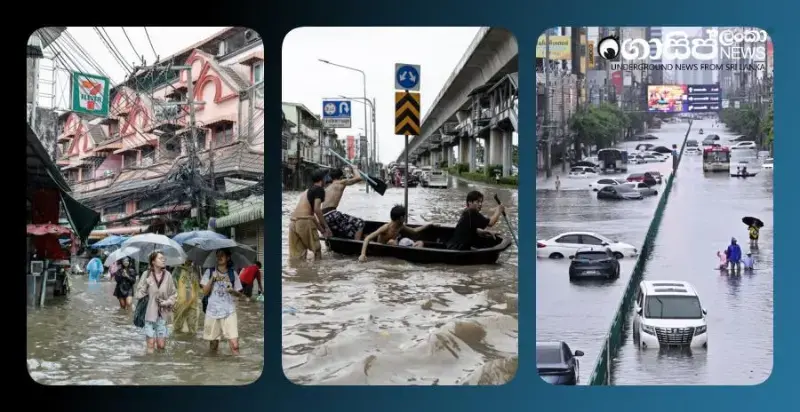
Due to heavy monsoon rains that began on September 24, 2026, in Bangkok, the capital of Thailand, and its surrounding areas, authorities have taken steps to declare all 50 districts of the city as disaster zones. This rainfall, which lasted for several days, caused all canals in the city to overflow, and this is considered the most severe urban flooding the capital has faced in about 15 years. With the continuous rain that began on Thursday, September 24, by September 26, Bangkok Governor Chadchart Sittipunt declared the entire city a disaster zone. Meanwhile, Prime Minister Anutin Charnvirakul, who was on a visit to Britain, cut short his trip and returned immediately. Some areas reported over 300 mm of rainfall within 48 hours.
This flooding was not due to the overflowing of the river system flowing from the north, but rather to extremely heavy local rainfall caused by a low-pressure depression in the central region and the influence of the southwest monsoon. The 487 mm of rainfall received from September 1 to 25 was nearly double the average, and the main drainage canals overflowing made it difficult to remove water using pumps. Many low-lying areas and main roads such as Phetchaburi Road, Lat Krabang, and Ramkhamhaeng were submerged under several feet of water, causing buses and cars to be submerged, and some houses near canals were flooded up to head and waist level.
Nearly 52,000 families in Bangkok were affected by this urban disaster, and close to 4,900 people were directed to temporary relief centers. Nationally, over 545,000 people in 25 areas were affected, and although eight people lost their lives, no confirmed deaths were reported within Bangkok city. The government declared special public holidays for September 28 and 29 for the capital and neighboring areas, and over 400 schools were closed. By Sunday, September 27, as the low-pressure area moved towards Myanmar, the rain subsided and water began to drain in the inner city, but it will take several more days for water levels in the eastern and canal-side areas to return to normal.
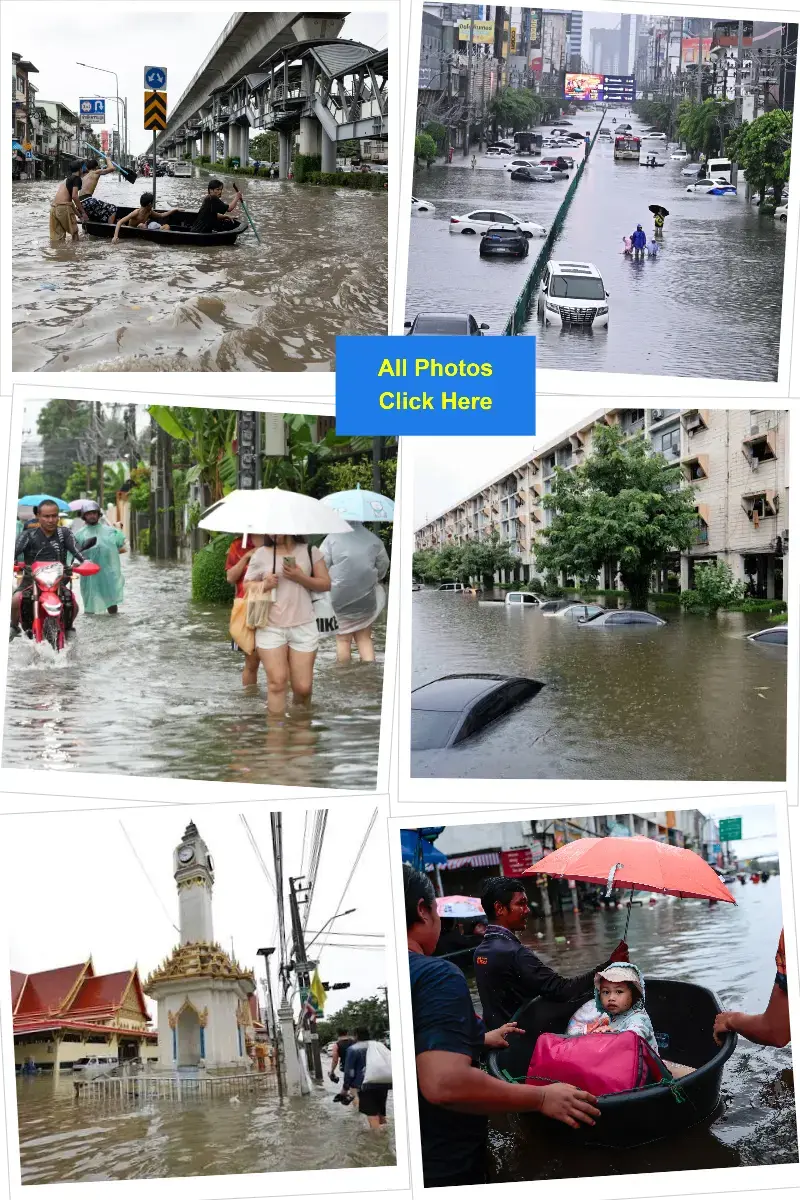
This flooding was not due to the overflowing of the river system flowing from the north, but rather to extremely heavy local rainfall caused by a low-pressure depression in the central region and the influence of the southwest monsoon. The 487 mm of rainfall received from September 1 to 25 was nearly double the average, and the main drainage canals overflowing made it difficult to remove water using pumps. Many low-lying areas and main roads such as Phetchaburi Road, Lat Krabang, and Ramkhamhaeng were submerged under several feet of water, causing buses and cars to be submerged, and some houses near canals were flooded up to head and waist level.
Nearly 52,000 families in Bangkok were affected by this urban disaster, and close to 4,900 people were directed to temporary relief centers. Nationally, over 545,000 people in 25 areas were affected, and although eight people lost their lives, no confirmed deaths were reported within Bangkok city. The government declared special public holidays for September 28 and 29 for the capital and neighboring areas, and over 400 schools were closed. By Sunday, September 27, as the low-pressure area moved towards Myanmar, the rain subsided and water began to drain in the inner city, but it will take several more days for water levels in the eastern and canal-side areas to return to normal.