![Gossip Lanka News [English]](https://blogger.googleusercontent.com/img/a/AVvXsEhYm2aFFq-bIW1nWX-RrqnPFoIsVos6_VCVz8BpLt0QJi55GNXHXC2fugeRvL0qUStEuCfs7Sfu6ZiSlhrkldxfGuE_wzy5gitY6rMZ2KSi8VBbGvkgXLks37RwZV-4-HKbWiNLRxB8C_r1e4z3mpxFTMPDJPEADoG8E-bZteWFipeD5KNGbjvCfqEfKw=s300 "Gossip Lanka News [English]")
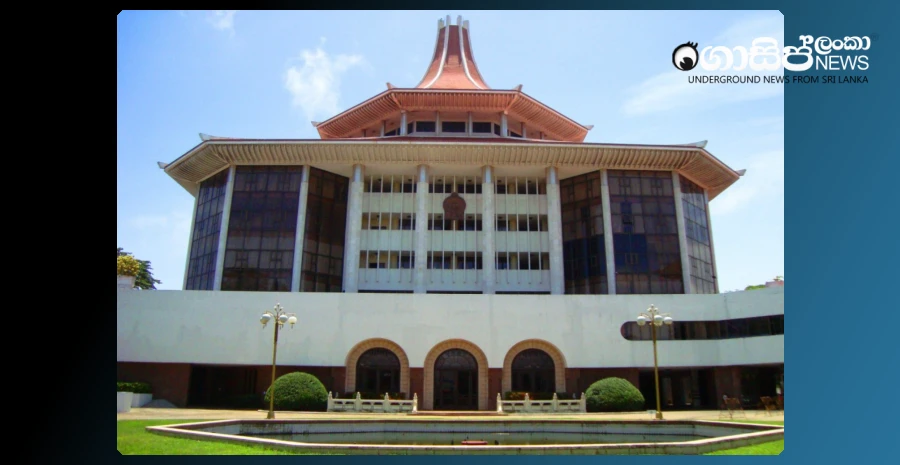
The petition filed against the 22nd Amendment Bill to the Constitution requests that it be considered an extremely serious and urgent constitutional issue, and that a full bench comprising all Supreme Court judges be appointed to hear it. The Treasurer of the Bar Association of Sri Lanka, Attorney-at-Law T.M.S.
Pasindu Silva and Assistant Secretary Attorney-at-Law Lakitha Isiwara Wakishthaarachchi have filed this petition before the Supreme Court through Attorney-at-Law Ramsi Bacha.The petitioners request that the proposed 22nd Amendment Bill be determined to violate Article 3 of the Constitution as a whole, and that it must obtain public approval through a referendum to become law. Alternatively, they have requested the court to declare that only Sections 2 and 3 of the relevant bill are unconstitutional and to order a referendum for them.
This bill, published on August 7, 2026, proposes to change the retirement age of Supreme Court judges and the composition of the judiciary. Section 2 proposes to increase the retirement age of Supreme Court judges to 67 years and Court of Appeal judges to 65 years. Furthermore, the Chief Justice's tenure is limited to the earlier of completing 67 years of age or completing 6 years in office, and Section 3 proposes to increase the number of Court of Appeal judges to 24.
The petitioners point out that this bill has been introduced without any prior agreement with professional bodies such as the Bar Association or the Judicial Service Association, or without public consultation. Stating that the current government has no electoral mandate to bring such an amendment, the petitioners argue that judicial independence is an essential part of the people's sovereignty, and therefore, obstructing it directly violates Article 3 of the Constitution.
The petition states that extending the service period of currently serving judges is akin to offering a legal bribe and is a tactic to bring the judiciary under political control. It is also alleged that by increasing the number of Court of Appeal judges, legislative action is being taken to appoint individuals favorable to them to the judiciary. The petitioners further emphasize that extending judges' service by two years nullifies the powers of the Constitutional Council to re-evaluate their suitability.
The petitioners' full conclusion is that Supreme Court judges making a decision on a bill that extends their own retirement age is contrary to the principles of natural justice, and the only fair solution in the face of the resulting conflict of legal benefits is to submit the relevant bill to a referendum.