![Gossip Lanka News [English]](https://blogger.googleusercontent.com/img/a/AVvXsEhYm2aFFq-bIW1nWX-RrqnPFoIsVos6_VCVz8BpLt0QJi55GNXHXC2fugeRvL0qUStEuCfs7Sfu6ZiSlhrkldxfGuE_wzy5gitY6rMZ2KSi8VBbGvkgXLks37RwZV-4-HKbWiNLRxB8C_r1e4z3mpxFTMPDJPEADoG8E-bZteWFipeD5KNGbjvCfqEfKw=s300 "Gossip Lanka News [English]")
China has proposed a major amendment to its Road Traffic Safety Law, including a specific chapter on autonomous vehicles, marking the first time autonomous driving technology has been addressed in national-level legislation.
On August 25, 2026, this draft was submitted for its first round of review to the Standing Committee of the National People's Congress, China's top legislature. Approved by the State Council in June 2026, this proposal aims to create a unified national framework for testing, demonstrating, and commercially operating autonomous vehicles, clarifying legal liabilities, and defining key concepts.
This new draft law, consisting of 9 chapters and 170 articles, includes a special chapter titled "Special Provisions for Autonomous Vehicles." It clearly distinguishes between fully autonomous driving and Level 2 driver-assistance systems. The vehicle manufacturer or importer will be held responsible for road traffic safety law violations occurring when the fully autonomous driving system is active, while the driver will bear full responsibility under traditional laws when the autonomous system is deactivated or operating at an assistance level. Independent analysts like Gao Shen point out that this removes previous legal ambiguities and eliminates obstacles to the production and sale of Level 3 and higher autonomous vehicles.
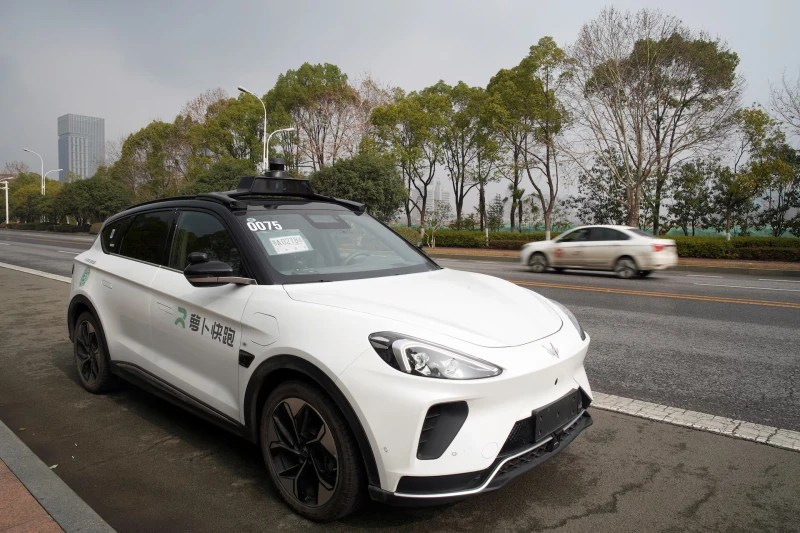
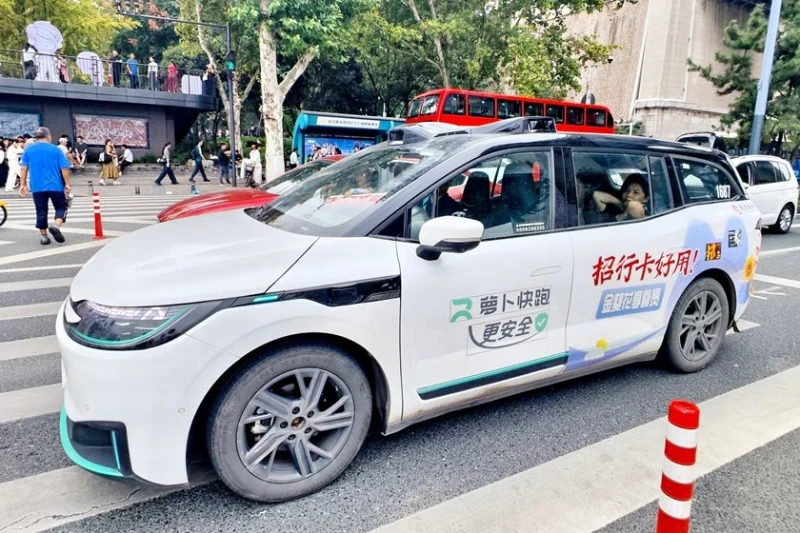
This legal amendment is linked to the national safety standard GB 44721-2026, which was approved in late July 2026 and is set to take effect on July 1, 2027. It stipulates that autonomous driving systems must at least be equivalent to the safety of a qualified human driver. China granted the first market approvals for Level 3 vehicles (Changan's Deepal and BAIC's Arcfox) in December 2025, and currently, robotaxi services like Baidu Apollo Go, Pony.ai, and WeRide have completed millions of test kilometers in cities such as Beijing, Wuhan, and Shenzhen.
The necessity for strict enforcement of new regulations was also confirmed by an incident in Wuhan in late March and early April 2026, where over 100 Baidu Apollo Go robotaxis became inoperable on the roads due to a system error, stranding passengers for nearly 2 hours and disrupting traffic. Additionally, the update to China's Road Safety Law, established in 2004, which covers 476 million vehicles and 567 million licensed drivers, focuses on several issues, including imposing fines of 200-500 yuan and a 3-month driver's license suspension for using mobile phones while driving, increasing the speed limit for electric bicycles to 20 kilometers per hour, and controlling abandoned vehicles and irregular groups occupying roads.
This draft amendment is currently at the preliminary review stage, with further discussions and a final vote expected in the future. By establishing a unified national legal framework instead of existing regional regulations, China is preparing to accelerate the commercialization of autonomous vehicles while maintaining a balance between safety and technological innovation.