![Gossip Lanka News [English]](https://blogger.googleusercontent.com/img/a/AVvXsEhYm2aFFq-bIW1nWX-RrqnPFoIsVos6_VCVz8BpLt0QJi55GNXHXC2fugeRvL0qUStEuCfs7Sfu6ZiSlhrkldxfGuE_wzy5gitY6rMZ2KSi8VBbGvkgXLks37RwZV-4-HKbWiNLRxB8C_r1e4z3mpxFTMPDJPEADoG8E-bZteWFipeD5KNGbjvCfqEfKw=s300 "Gossip Lanka News [English]")
On July 28, 2026, a powerful earthquake struck near the Uto/Uki area in Kumamoto Prefecture, on Japan's southwestern Kyushu island. The Japan Meteorological Agency (JMA) recorded the earthquake at a magnitude of 7.1 on the Richter scale, while the United States Geological Survey (USGS) reported it as Mw 6.8.
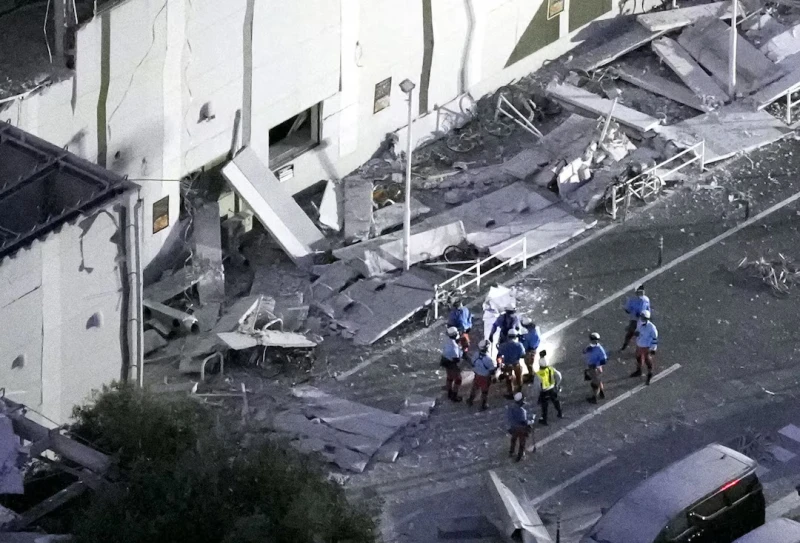
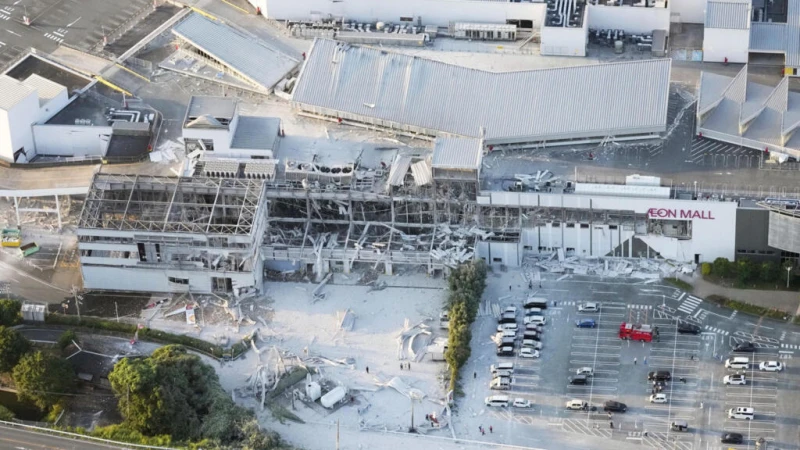
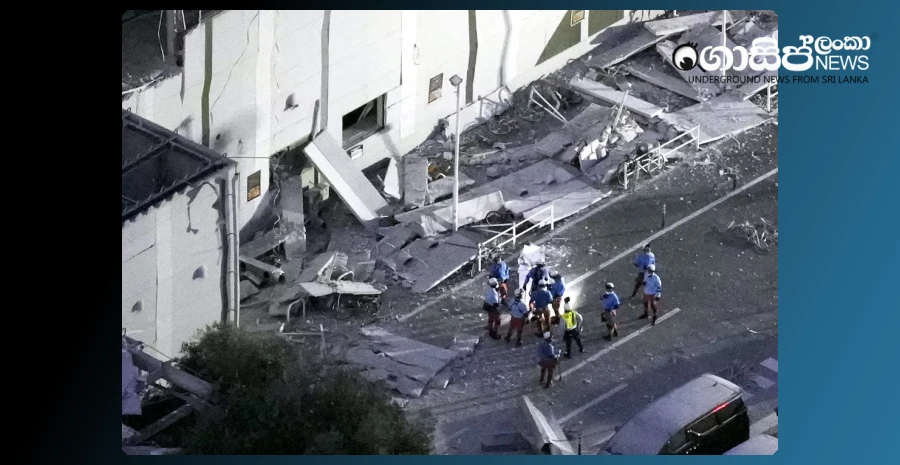
This disaster, occurring at a shallow depth of about 10 kilometers, was linked to a strike-slip fault within the Hinagu Fault zone, which caused the severe earthquakes in Kumamoto in 2016. In the Uki and Himakaw areas, it registered at level 7, the maximum on Japan's 'Shindo' intensity scale, a level at which people cannot even stand, and buildings suffer severe damage. The intensity was recorded as 6+ in many areas including Kumamoto City, Yatsushiro, Uto, and Mashiki, and the tremor was strongly felt across the entire Kyushu island and in neighboring prefectures.On July 29, Japanese Prime Minister Sanaye Takaichi confirmed that the death toll had risen to 13. Describing the situation as a race against time, the Prime Minister stated that all available state resources would be deployed to rescue those still trapped in the rubble. The Aeon Mall complex in Kashima City, the largest shopping complex in Kumamoto Prefecture with nearly 200 stores, suffered the most severe damage from the earthquake. After the initial tremor, customers and employees were evacuated, and about an hour later, a powerful explosion, suspected to be caused by a gas leak, occurred there. The explosion caused the second floor of the building to partially collapse, destroyed exterior walls, exposed iron beams, and scattered debris across the parking lot.
It was confirmed that two young women in their twenties died at the shopping complex, and by early Wednesday morning, rescue teams had managed to free eight people from the rubble. Initially, 20-30 employees were reported missing, but this number was later found to be lower; however, searches continue due to aftershocks and the precarious condition of the building. Approximately 200 people had been evacuated to the parking lot before the explosion, and the shopping complex had only reopened on June 13, 2026, after repairs from the 2016 earthquake damage. Additionally, at the Nippon Paper Industries factory in Yatsushiro, a chimney collapse trapped several workers, with reports of about seven employees missing and some seriously injured and in critical condition.
This disaster caused numerous homes to collapse, trapping people, and resulted in fires, damage to roads and bridges. Stone walls of Kumamoto Castle, which were damaged in 2016 and still undergoing reconstruction, also collapsed, and a train derailed at Yatsushiro Station. Hospitals treated hundreds of people for fractures, burns, and other injuries, with over 80 patients assisted at one facility alone. Health centers operated under severe difficulties amidst high temperatures of around 34 degrees Celsius, and electricity was cut off for 36,000 to 48,000 households. Nearly 260,000 people, including residents of Kumamoto and Nagasaki areas, were advised to evacuate, and thousands sought shelter in relief centers. In the transportation sector, Kyushu Shinkansen and local train services were suspended, and Kumamoto Airport was temporarily closed, leading to the cancellation of many flights.
In the industrial sector, operations at Sony, Tokyo Electron, Honda, and Toyota facilities in Kyushu were suspended as a precaution, and TSMC employees were also temporarily evacuated. No abnormalities were reported at nearby nuclear power plants, and a short-term tsunami warning issued for the Ariake and Yatsushiro sea areas was later lifted. Following this earthquake, which saw gravitational acceleration reach a high of 1.7 g, warnings for potential landslides and strong aftershocks have been issued for a week. Thousands of personnel from the Japan Self-Defense Force (SDF), police, firefighters, and emergency relief workers are continuously conducting rescue operations, focusing on the shopping complex, while air force planes assess damage and distribute food and water. This region, located in the Pacific 'Ring of Fire,' also experienced earthquakes in 2016 that claimed the lives of nearly 270 people, and despite Japan's strict building codes, the shallow depth, high intensity of the tremor, and the explosion at the shopping complex have exacerbated the severity of this disaster.