![Gossip Lanka News [English]](https://blogger.googleusercontent.com/img/a/AVvXsEhYm2aFFq-bIW1nWX-RrqnPFoIsVos6_VCVz8BpLt0QJi55GNXHXC2fugeRvL0qUStEuCfs7Sfu6ZiSlhrkldxfGuE_wzy5gitY6rMZ2KSi8VBbGvkgXLks37RwZV-4-HKbWiNLRxB8C_r1e4z3mpxFTMPDJPEADoG8E-bZteWFipeD5KNGbjvCfqEfKw=s300 "Gossip Lanka News [English]")
The crisis between the United States, Iran, and Israel further escalated on April 4 and 5, with the drone attack in the Strait of Hormuz being the most significant event to capture global attention. Iran launched this attack targeting a commercial vessel suspected of being linked to Israel, and Iranian state media confirmed that the vessel caught fire.
The attack on this region, through which a vast percentage of the world's oil supply is transported, has severely impacted regional security, the international energy market, and the global economy.Another extremely critical event in the conflict is the downing of a US F-15E fighter jet within Iranian airspace. According to reports from Reuters and Associated Press news services, one crew member from the aircraft has been rescued, but operations are still underway to find the other person. Although Iran claims to have shot down the aircraft using one of its latest air defense systems, this has not yet been fully confirmed by independent sources. Nevertheless, this indicates a significant increase in Iran's military resistance against US air operations.
Amidst these military activities, the political situation has also become more heated, with US President Donald Trump issuing a stern 48-hour ultimatum to Iran. He warned that if the Strait of Hormuz is not promptly reopened and obstacles to international oil transport are not removed, Iran would face a massive counterattack. However, Iran has completely rejected this ultimatum, calling it weak and provocative. Given this situation, the scope for diplomatic solutions is severely limited, and there is a high risk of a series of further attacks across the region in the coming hours.
Meanwhile, there are also reports that the United States is preparing to launch more precise attacks on deep targets within Iran. Bloomberg media states that JASSM-ER long-range cruise missiles, capable of traveling over 600 miles, have already been deployed for Middle East operations. Although this has not been officially confirmed at the state level, Reuters reports indicate that intense pressure on US missile stockpiles and supply networks suggests that Washington is planning for a long-term, high-intensity military operation.
Parallel to the military conflicts, the humanitarian crisis unfolding across the region has reached a tragic state. The Red Cross and Red Crescent organizations indicate that since February, over 1,900 people have died and more than 21,000 have been injured in Iran, with medical supplies in the country facing severe risks. Additionally, UNICEF reports show that over 370,000 children in Lebanon have been displaced, with a large number of them killed or injured. With schools destroyed, children's education has been completely disrupted, and international aid agencies warn that the psychological trauma of this war will have a severe impact on future generations.
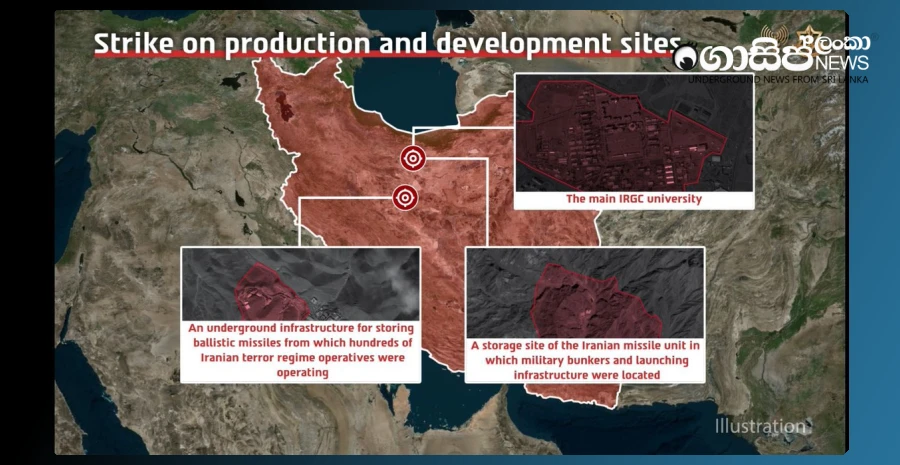
In addition to civilian lives, continuous airstrikes are targeting Iran's key economic and infrastructural facilities. A severe attack on the Mahshahr petrochemical industrial zone resulted in five deaths and nearly 170 injuries. Furthermore, foreign reports confirm damage to several universities and industrial zones in Iran. Notably, one security guard was killed by debris from an attack near the Bushehr nuclear power plant, and due to the insecure situation in that area, Russia has taken steps to further evacuate its employees from the plant.