
A number of practical problems accumulated within the country's school and university system, ranging from the thirty-kilometer limit that has become an obstacle for teachers who have served for more than ten years in the same school to obtain a transfer, to a school auditorium that is being destroyed due to not being handed over despite the completion of its construction, recently received serious attention in Parliament.
These matters were extensively discussed at the Advisory Committee of the Ministry of Education, Higher Education, and Vocational Education, which met on the 20th, chaired by Prime Minister and Minister of Education, Higher Education, and Vocational Education, Dr. Harini Amarasuriya. The committee stated that teacher transfers, physical resource development in schools, preschool education, the school lunch program, and problems faced by university students were the main topics.
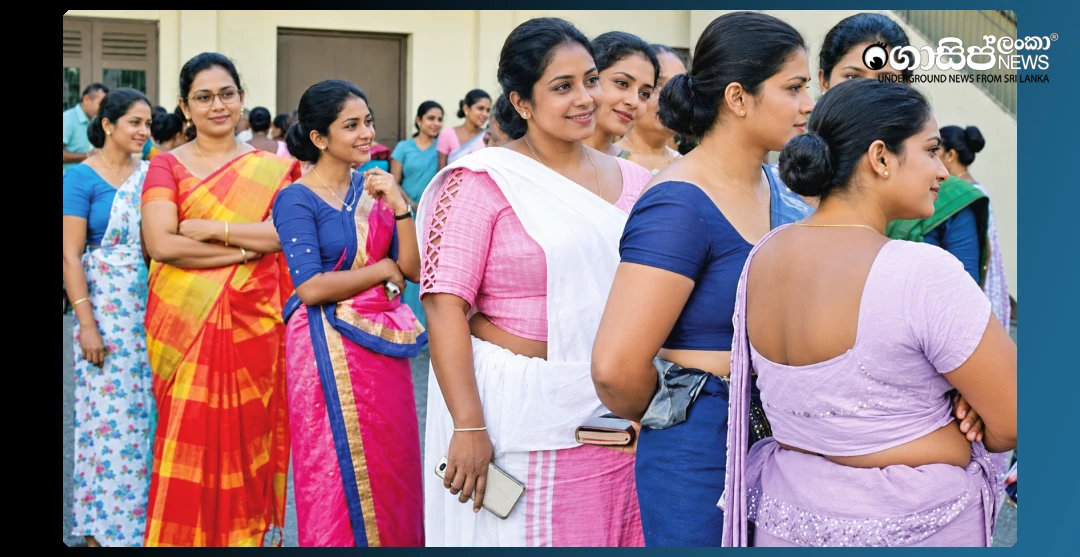
During this discussion, critical attention was focused on the practical obstacles in the teacher transfer process. As a solution to the problem faced by teachers who have served for more than ten years in some national schools, where there are no other national schools to transfer to, the committee decided to seek advice from the Attorney General regarding the possibility of transferring teachers between national and provincial schools solely for transfer purposes.
It was also pointed out that the thirty-kilometer distance limit imposed by the Teacher Transfer Board creates practical problems for remote schools in districts such as Hambantota, Polonnaruwa, and Anuradhapura. Accordingly, it was decided to inform the Transfer Board to re-evaluate this distance limit. Meanwhile, the committee's attention was also drawn to formulating a new policy to be implemented from 2027, replacing the existing teacher transfer policy in the Northern Province.
Another major factor hindering the teacher transfer process identified here was the incorrect submission of teacher service period information by some schools and shortcomings in the teacher data system. Accordingly, steps to physically inspect schools suspected of concealing relevant information and to update the teacher data system to accurately calculate the service period were discussed.
During the discussion on physical resources in the school system, extensive information was presented regarding buildings that were half-completed and abandoned, as well as buildings that were not handed over to schools despite the completion of work. The auditorium of Kuliyapitiya Central College was a prime example. It was revealed that due to its construction being completed but not handed over, the soundproofing panels and air conditioning systems were being destroyed, and the committee decided to conduct a separate investigation into the matter.
When reviewing school development activities at the district level, it was decided to allocate provincial funds to address the shortcomings in the special education units of Vembalkulam and Nachchikulam schools in the Vavuniya district. It was also decided to approve estimates and provide funds for twelve out of twenty-one projects identified in five schools under the primary school development project in the Hambantota district.
Supervisory gaps in preschool education and the school lunch program also emerged during this meeting. Although a new curriculum for preschools has been developed, the lack of a formal mechanism to monitor its proper implementation was discussed, and the need to resolve administrative and supervisory issues arising from the division of responsibilities between provincial councils and relevant ministries was emphasized. Furthermore, issues related to the non-adherence to guidelines issued for the free lunch program provided to schoolchildren and the quality of food also received attention.
Meanwhile, the "Expert Committee Report including measures to eliminate underutilization of human resources in the Sri Lankan education system," prepared according to the instructions given by the sub-committee on human resource issues in schools, was presented to the committee by Deputy Minister Dr. Kaushalya Ariyaratne. The discussion concluded with the committee's attention focused on referring this report, which includes human resource problems in the education system and their solutions, for future action.