
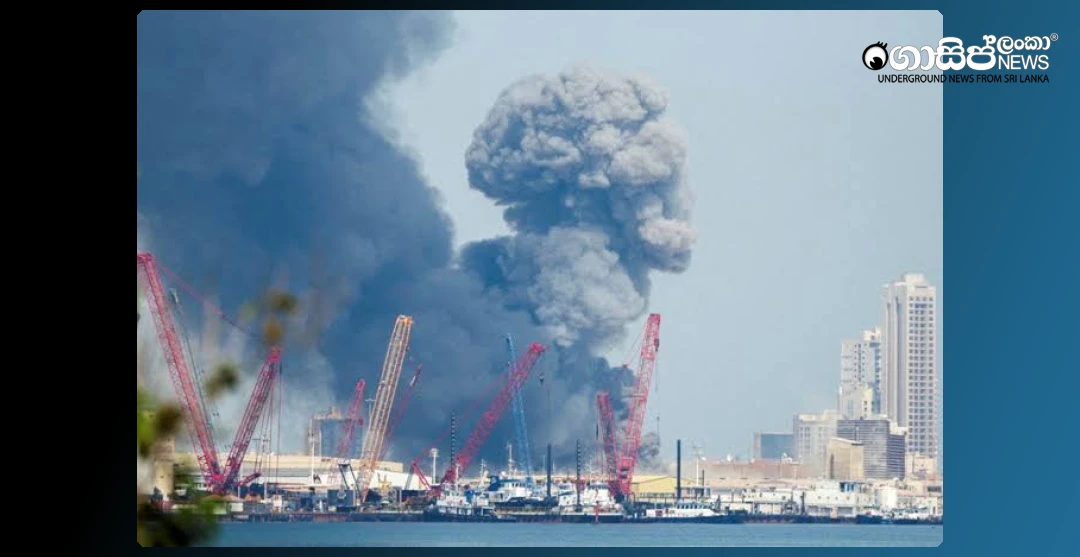
Further intensifying the war tensions in the Middle East, Iran has launched a series of drone attacks targeting an American military base in Bahrain. With this attack, hopes for peace talks between Tehran and Washington have completely collapsed, and the regional crisis has further escalated due to the latest advance of Houthi rebels in Yemen.
The Iranian Islamic Revolutionary Guard Corps (IRGC) stated that it had sent six drones targeting an American air defense radar system located at the Al Riffa helicopter base in Bahrain, in response to recent "hostile" attacks by the United States. However, Bahraini authorities confirmed that their air defense systems destroyed the drones before they could reach their target. This is the second drone attack launched by Iran within three days in response to American attacks, and warning sirens have sounded across Bahrain following the attack. Due to the attacks, Bahraini authorities had also advised their residents to go to safe places.
Speaking at a press conference in Tehran, Iranian Foreign Ministry spokesperson Esmaeil Baghaei emphasized that Iran would continue to respond to any military aggression by the United States or any other country. When asked if Iran's stance had changed amid stalled talks with the United States, he stated that Iran "does not wait for anyone" and is solely focused on its national security.
Over the past few weeks, American forces had launched attacks on several Iranian targets, including Qeshm Island in the Strait of Hormuz. Last week, US President Donald Trump called these attacks minor, adding that Gulf countries, including Saudi Arabia, had warned him about large-scale military operations. The President also stated that Washington no longer expects to reach an agreement with Iran. Trump has instructed Vice President JD Vance to focus his attention on investigating corruption and fraud in states and cities controlled by the Democratic Party. Vance, who had previously accused the Iran war of causing the Republican Party to lose control of Congress in the midterm elections, had earlier requested a private meeting with Iranian representatives to discuss peace terms.
Meanwhile, the IRGC announced that two ships had struck sea mines in the Strait of Hormuz, and a supertanker carrying 2 million barrels of crude oil had sunk. Their statement indicated that the vessels were engulfed in massive explosions and fire. However, there has been no independent confirmation of this yet, and the US military recently stated that all sea mines had been cleared from major shipping lanes. This conflict, which began with joint US-Israeli attacks on Iran in February, is currently in a stalemate, with the US maintaining naval sanctions while Iran asserts its dominance in the Strait of Hormuz.
Bahrain is home to the headquarters of the US Fifth Fleet and Naval Forces Central Command, which support military operations in the Middle East. Iran continued this series of attacks until September, but then experienced some setbacks. Resuming the attacks, a drone strike also targeted an American radar station on Friday, and US Central Command stated that two drones were shot down without causing any damage.
This latest attack has been strongly condemned by the Bahraini Ministry of Foreign Affairs, which called it a "barbaric aggression" violating international law. Bahrain emphasizes that it rejects its territory being turned into a battleground for conflict resolution and that Iran is solely responsible for these attacks and their consequences. Jordan, Egypt, Saudi Arabia, and Qatar have also condemned the attack and expressed their support for Bahrain. "What I never expected is exactly what is happening. Iranian attacks have resumed, and with them, fear and uncertainty have emerged," said Hayat Ibrahim, a 65-year-old Bahraini resident, to AFP news agency.
Meanwhile, the civil war in Yemen has also taken a critical turn. Iranian-backed Houthi rebels have expanded their power against government-loyal forces in southern Yemen, opening a path to Aden. The 'Southern Armed Forces', which support the Yemeni government, announced that they had withdrawn their troops from the Bab al-Mandab region and Dhubab airport and redeployed them to protect Aden, located on the southern coast. This indicates a clear setback for the government forces' six-week operation to secure the critical oil shipping route in the Red Sea. AFP news agency also reported that several people were killed and 12 others injured in a Houthi missile attack near Aden.