
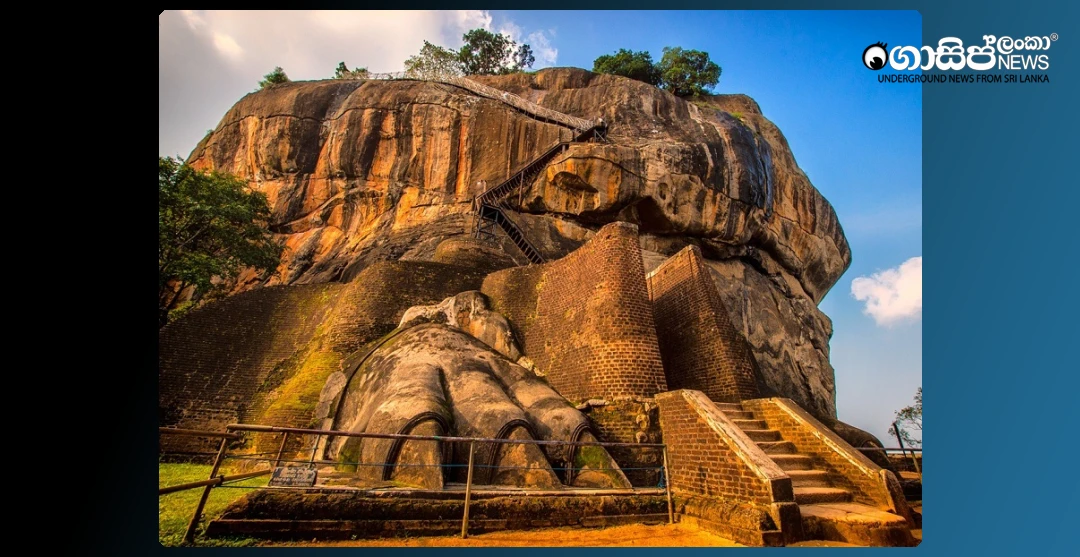
The Human Rights Commission of Sri Lanka has ordered the relevant authorities to immediately investigate the damage caused to the Sigiriya rock due to drilling activities and the installation of heavy machinery, and to take prompt action. The Commission issued this order while announcing its decision regarding a petition dated October 20, concerning these construction and conservation activities reported to have occurred in 2017.
The Commission has thus informed the Department of Archaeology, the Central Cultural Fund, the Ministry of Cultural Affairs, and the Sigiriya Project of the Central Cultural Fund to conduct an investigation and take prompt action. The Commission also emphasized that when dealing with matters of national importance, a proper mechanism should be implemented under the collective supervision of institutions such as the Department of Archaeology, the Cultural Triangle, and the National Building Research Organisation.
This petition was submitted by a person named Diman Ananda. In his petition, he alleged that archaeological evidence was being destroyed by conservation and development activities carried out at the Sigiriya World Heritage site in 2017. He stated in his complaint that the rock had been drilled, machinery had been installed on it, the Lion's Paw had been altered, and ancient inscriptions had been removed.
The Human Rights Commission states that it investigated the petitioner's complaints through an on-site inspection. It was observed that a cable system had been installed from the base to the top of the rock for transporting goods, and related equipment had been affixed to the rock. Furthermore, the Commission found that the rock had been drilled using electrical equipment, and modern plaster and cement had been used in the conservation of ancient plaster.
The Commission has concluded that the respondents failed to confirm that these constructions were carried out with proper approval or according to proper procedures. The decision also states that the Sigiriya rock, identified by the Commission as the most important natural and cultural feature of Sigiriya, has been damaged as a result. Furthermore, the Commission pointed out that development activities carried out without proper procedures could violate rights related to cultural and environmental heritage.
However, commenting on the other allegations made by the petitioner, the Commission stated that the petitioner was unable to substantiate the allegation that ancient inscriptions had been removed. The decision also notes that the Department of Archaeology informed the Commission that only seven rock inscriptions have been identified from the Sigiriya area.
Emphasizing the importance of archaeological sites, the Human Rights Commission has put forward necessary recommendations to resolve this issue through the relevant authorities and to take steps to protect archaeological sites and their significance.