For a long time, many people have been curious about butterflies flying in swarms in one direction during a certain time of the year. Elders say that during the Sri Pada season, yellow butterfly swarms travel towards Sri Pada.
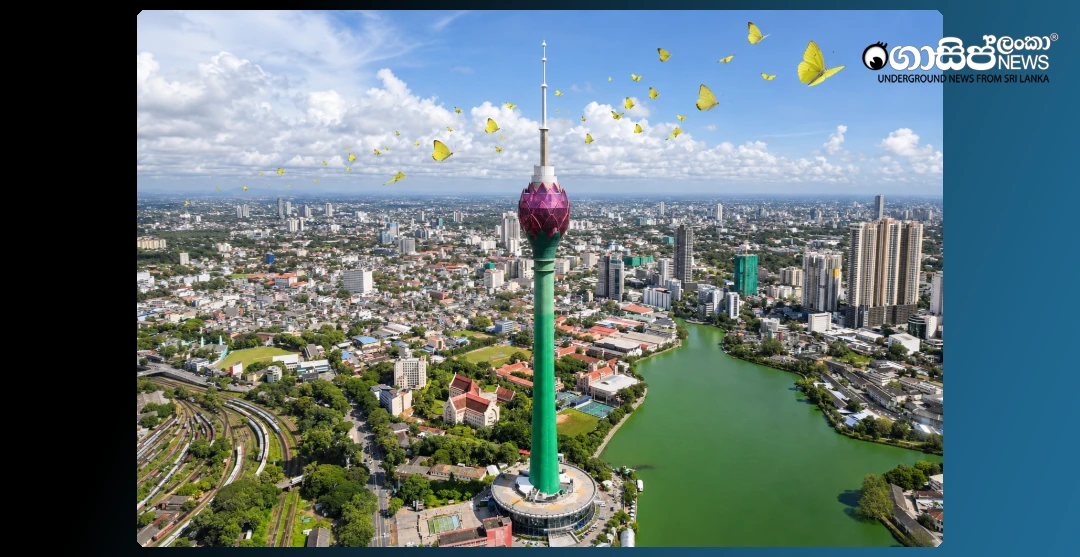
If you look at the Colombo sky these days, you will witness a wonderful sight. It is the flight of small yellow and white butterflies adorning the sky not only in Kurunduwatta, Borella, Nugegoda, Boralasgamuwa, Wellawatta, and Kirulapana, but also in many districts like Gampaha, Ratnapura, and Galle. This amazing journey, where sometimes fifteen or twenty, and at other times more than a hundred butterflies fly in the same direction between 9:00 AM and 4:00 PM, has become a major topic of discussion in society.While some look at this with curiosity, others question whether it is a premonition of an impending cyclone, earthquake, or natural disaster. Furthermore, according to an ancient legend, many believe that these swarms of flying butterflies are heading towards 'Samanala Kanda' or Sri Pada. However, behind this spectacular flight lies not a premonition of disaster or a mystical event, but the extremely beautiful phenomenon called 'Butterfly Migration,' linked to nature's normal ecological cycle.
According to butterfly specialist Ms. Dhammika Priyadarshani, the recent heavy rains, which led to an abundance of new shoots and leaves and accelerated plant growth in the environment, are a major factor influencing this migration. 'Host plants' are essential for butterflies to lay eggs and for the caterpillars that hatch from them to feed. This growth in host plants due to the rain has led to a significant increase in the butterfly population.
With the sudden increase in population, the host plants and food resources available in one area become insufficient for the large butterfly population. To minimize competition for resources, they begin to migrate in swarms to other areas, seeking new habitats, food, and suitable plants for laying eggs. This is not merely a random occurrence but a natural migration pattern linked to food, reproduction, and environmental conditions.
Typically, the main butterfly migration season in Sri Lanka occurs during the second inter-monsoon period, from October to December. Additionally, a smaller-scale migration can be observed in March and April, during the first inter-monsoon period. Ms. Priyadarshani emphasizes that such large butterfly swarms have not been seen for several years, making this prominent butterfly migration after a long time particularly noteworthy. A striking feature of this migration is their increased movement towards the dry zone. The reason for this is the growth of host plants and the abundance of food resources in those areas due to the rain.
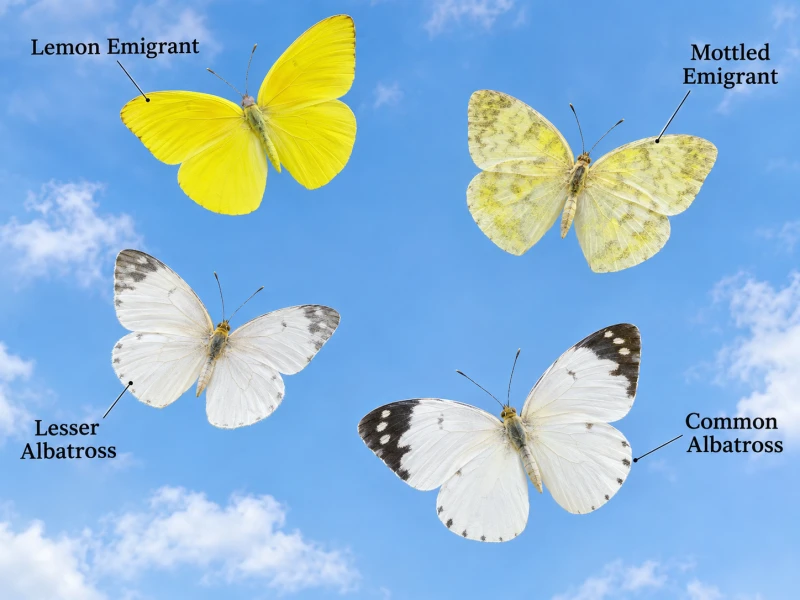
Among these swarms flying across the sky, the main species identified are the white and yellow butterflies: Lemon Emigrant, Mottled Emigrant, Lesser Albatross, and Common Albatross. In addition, 'Painted Lady' butterflies, usually found in high mountainous regions, have also been observed in small numbers in some areas.
According to scientific field observations, not all these butterflies travel towards a single destination or specifically towards Sri Pada. The attraction of butterflies to high mountain peaks is scientifically known as the 'Hill-topping' concept. This is a mate-finding behavior and does not always mean that a mountain peak is the final destination of their migration. Furthermore, although butterflies are sensitive to atmospheric conditions such as temperature, wind, and humidity, no scientific evidence has confirmed a direct link between their migration pattern and natural disasters.
There is also a risk that this beautiful sight, which delights our eyes today, may be lost in the future. Climate change, irregular rainfall patterns, destruction of natural habitats, and the spread of invasive plants severely impact the butterfly life cycle. Specifically, the destruction of host plants essential for their caterpillars directly affects their reproductive process.
These yellow and white wings that have invaded the sky do not tell us of a premonition of disaster. It is a wonderful lesson about nature's life cycle, reminding us of the extremely complex relationship between rain, plants, food, and the survival of living beings.