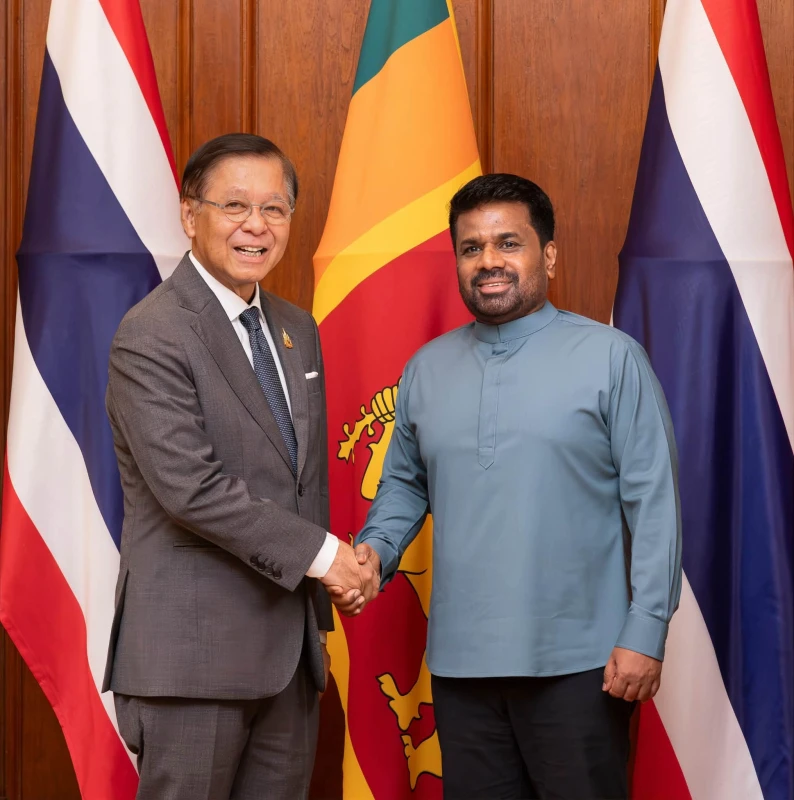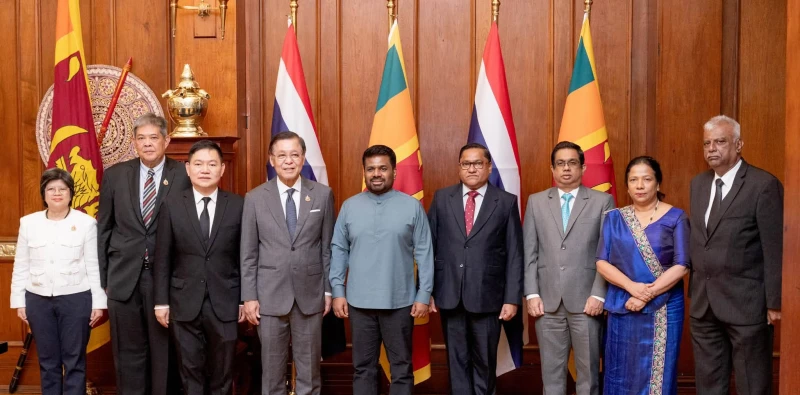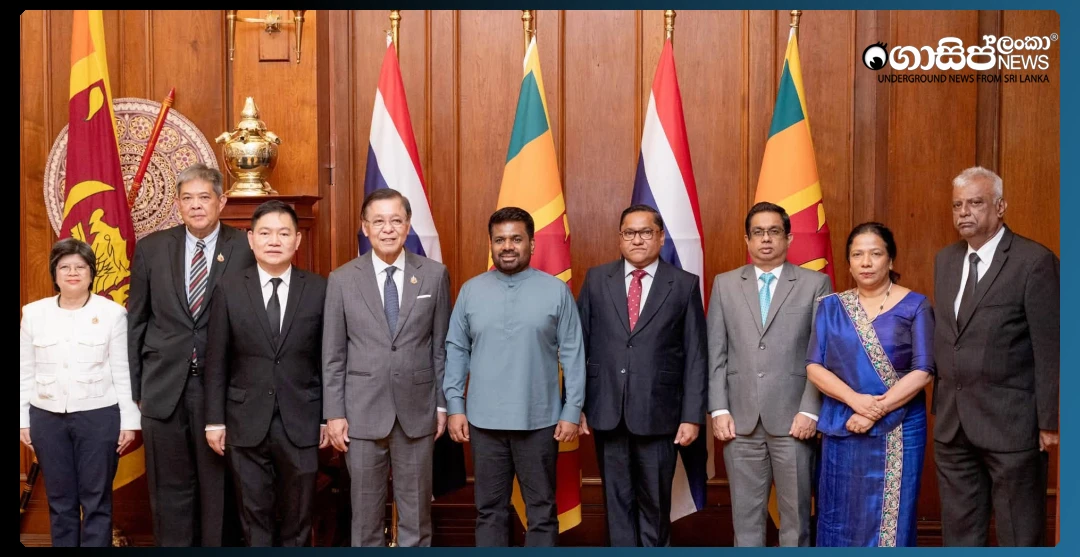
Two months after the unilateral 60-day visa-free access granted to Sri Lankans for Thailand ended on September 15th, a new bilateral visa exemption agreement was signed today (November 22) in Colombo, facilitating travel between the two countries once again.
This agreement, which applies to ordinary passport holders, was signed by Sri Lankan President Anura Kumara Dissanayake and Thailand's Deputy Prime Minister and Minister of Foreign Affairs, Mr. Sihasak Phuangketkeow, who is on an official visit to the country. Coinciding with the official visit of the Thai Deputy Prime Minister, which runs from November 20th to 23rd, bilateral discussions between the two parties were held this afternoon at the Presidential Secretariat.
Under this new agreement, ordinary passport holders of both countries will be able to stay visa-free for up to 30 days per visit. It also includes a cumulative stay limit of up to 90 days within any 180-day period. However, this concession is only for general tourism purposes. For long-term stays, employment, educational activities, or other restricted activities, obtaining a separate visa or relevant permits remains mandatory.
Although the agreement between the two countries has been signed, the exact date for its official implementation has not yet been announced. Accordingly, until the new agreement comes into force, the existing visa regulations will remain in effect.
Making a note on his Facebook social media account regarding this, President Anura Kumara Dissanayake stated that this agreement, signed with the aim of facilitating tourism and further strengthening people-to-people ties, is considered a significant milestone in the friendly and close relations between Sri Lanka and Thailand.
Through this visit by the Thai Deputy Prime Minister, the President also pointed out that the long-standing historical, cultural, and religious ties between the two countries are reflected. Furthermore, the President further stated in his note that this will create new opportunities to further expand cooperation between the two countries in the fields of trade, investment, tourism, foreign employment, and agriculture.
Thus, the diplomatic steps have been completed, paving the way for tourists from both countries to travel visa-free again, and now only the official announcement of the date when this new agreement will practically come into effect remains.