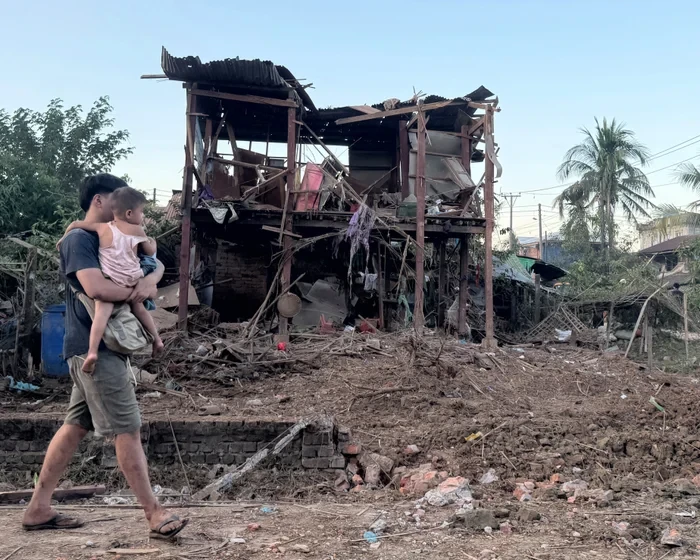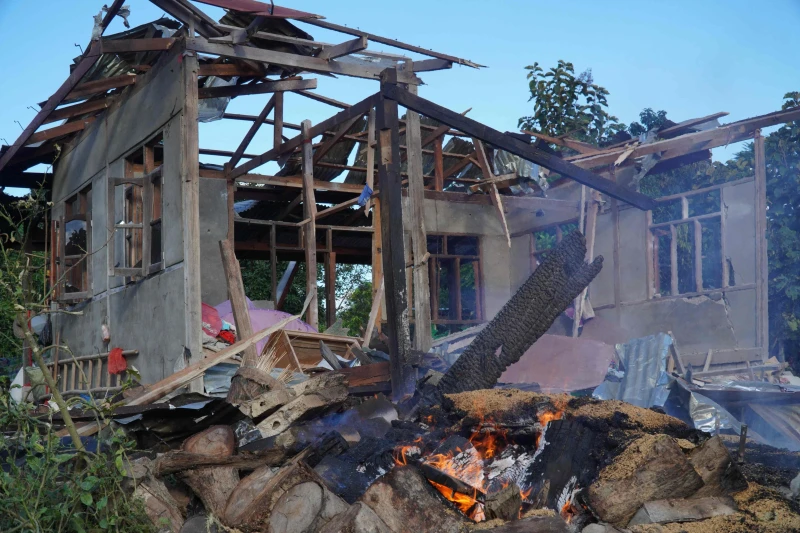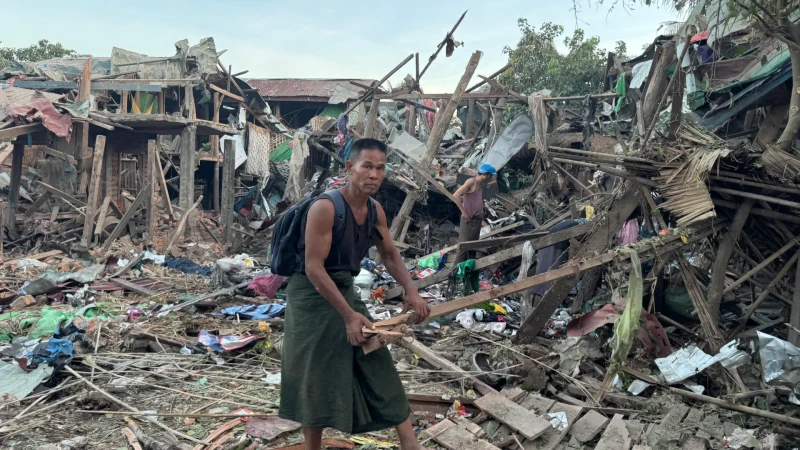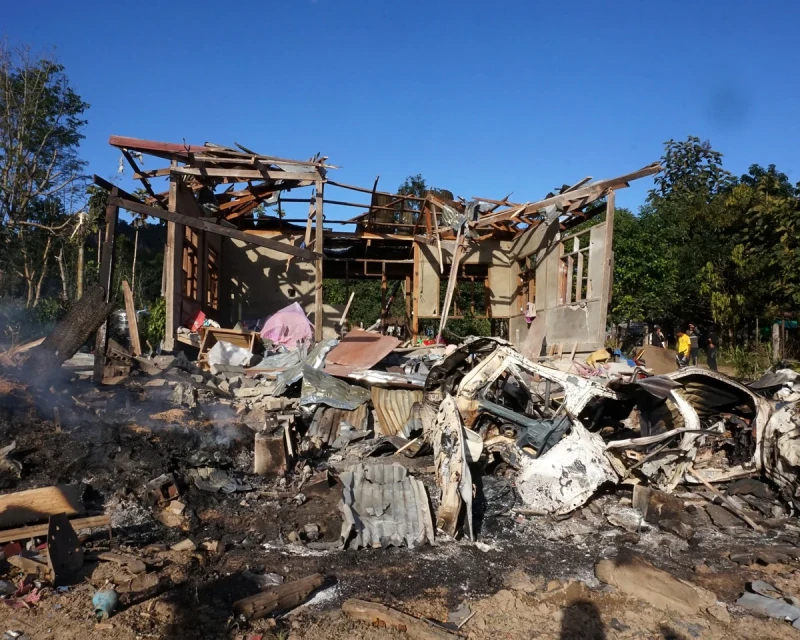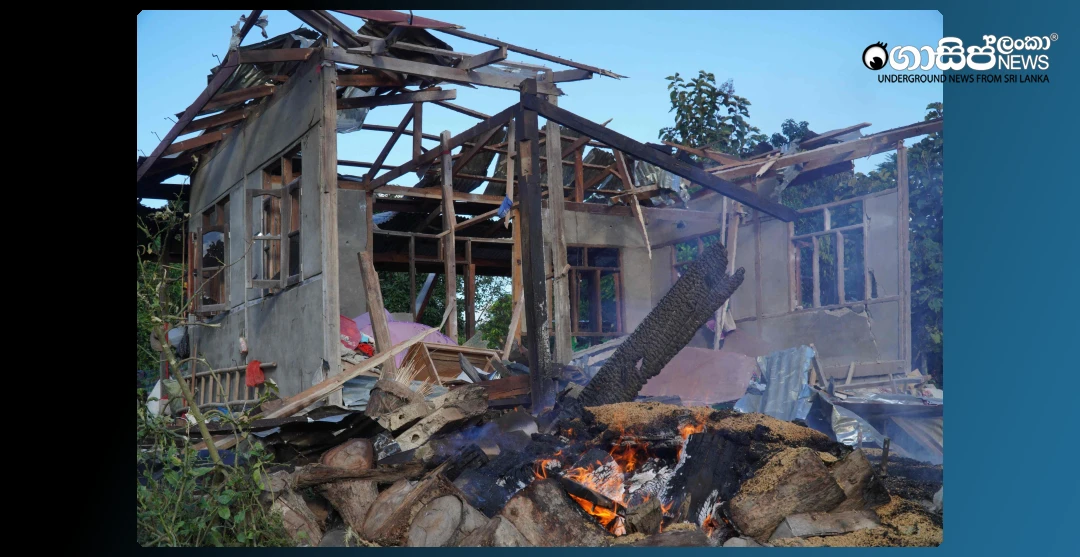
A wedding of a displaced couple, a school and monastery complex where children gathered, and a crowded market in the evening fell victim to Myanmar military air strikes within three days. These series of attacks, which occurred in three regions of the country between November 26 and 28, 2026, reportedly killed more than 50 to 60 people.
These incidents have once again confirmed the deadly pattern that has long been observed in the civil war that began after the military coup in February 2021.The first incident in this series of attacks was reported on Thursday, November 26, in In Yon village, within the Sinbaungwe township area of the Magway region in central Myanmar. Air strikes, artillery attacks, and suicide drone attacks targeted a school and a monastery complex in this area, which is known for its high resistance activities. According to the exiled opposition-controlled National Unity Government (NUG) and local eyewitnesses, between 29 and 30 people died. Among them were about 20 civilians, including women, children, students, young monks, teachers, and an infant, as well as nine fighters from the People's Defense Force (PDF). Teachers stated that the attack occurred during a religious festival or a school sports event, and bombs fell very close to where parents were waiting to pick up their children. It is reported that four 500-pound bombs, 12 artillery shells, and seven suicide drones were used in this attack, and witnesses say there were no active conflicts at the time of the attack. However, pro-military channels claimed it was an attack targeting a rebel gathering.
Two days later, on Saturday, November 28, a similar tragedy struck the Mo Bye area near the Kayah border in southern Shan State. Local aid groups and witnesses confirm that an air strike on a wedding ceremony of an internally displaced couple killed 21 people, including five children, and injured more than 35 to 40 people. Although Mo Bye town is under military control, opposition forces and a large displaced population reside in the surrounding areas. It is reported that a second bomb fell after rescue teams arrived at the scene, which has been identified as a pattern of targeting rescue personnel. One witness stated that he found 17 bodies amidst heavy smoke and chaos. Videos released after the attack showed blood-stained injured people being carried away, and a crying girl asking where her parents were and stating that she had no money for treatment.
On the same day, around 8 PM, another series of air strikes targeted a market and residential areas in the Mrauk-U region of Rakhine State. This area, which is under the control of the Arakan Army, a powerful ethnic armed group, was later hit by a second attack. These attacks reportedly killed nine to more than 10 people and injured about 20. The head of a local funeral organization confirmed nine deaths, and a displaced father described how he pulled his 17-year-old daughter from the rubble, but she died while being taken to the hospital. The military-led government has not yet publicly commented on any of these three attacks.
The political context of this series of air strikes has also received special attention. These attacks occurred exactly one week after the International Court of Justice (ICJ) delivered a historic ruling on November 19, 2026, stating that Myanmar had committed genocide through its clearance operations against the Rohingya people in Rakhine State in 2017. The ruling, delivered by a 9-to-6 vote, is considered the first time the ICJ has found a state responsible for genocide. The court cited systematic killings, widespread sexual violence, severe violence against children, and the flight of over 700,000 people, with an estimated 10,000 deaths. Accordingly, the court issued orders for investigations and prosecutions, reparations, ensuring safe and voluntary returns, and guaranteeing that such incidents do not recur.
However, Min Aung Hlaing, who commanded the military during the 2017 operation and now serves as the military-backed president after elections held under strict control, rejected the ruling, stating that Myanmar would not comply with its inappropriate parts. He called it a unilateral decision detrimental to the country's reputation and has long framed the Rohingya issue from an anti-terrorism perspective.
The peaceful protests that began after the military, under Min Aung Hlaing, overthrew Aung San Suu Kyi's elected National League for Democracy government on February 1, 2021, were suppressed with deadly force. Subsequently, with many civilians joining the People's Defense Force and various ethnic armed organizations, the country descended into a multi-front civil war. The military is the only party in the conflict with airpower, and they almost daily attack resistance-controlled or conflict-affected areas using jets, drones, and low-cost aircraft like paramotors, as well as unguided munitions. Analysts and rights groups point out that the repeated targeting of schools, monasteries, markets, hospitals, and displacement camps is a strategy of terrorizing the population and collective punishment to weaken public support for resistance forces. The pattern of secondary attacks targeting rescue teams has also been documented by UN investigators.
According to data from monitoring groups like ACLED, over 100,000 people have died from all sides since 2021. The National Unity Government states that over 15,000 air strikes have occurred since the coup, leading to thousands of civilian deaths and damage to hundreds of schools and religious buildings. Although it is difficult to independently verify every video or specific death toll in real-time due to access restrictions, communication breakdowns, and security risks, international media outlets such as Al Jazeera, BBC, Reuters, Guardian, and AFP have reported these attacks, citing consistent information from local aid groups, opposition statements, and witnesses.
The National Unity Government and local authorities, who condemn the latest attacks as war crimes and violations of the Geneva Conventions, are currently gathering evidence and repeatedly call on the international community to immediately stop supplying the military with aviation fuel, ammunition, and drone technology. Despite international isolation, the historic genocide ruling, and advances by resistance forces on multiple fronts, these deadly air operations raining down from Myanmar's skies have not yet ceased.