
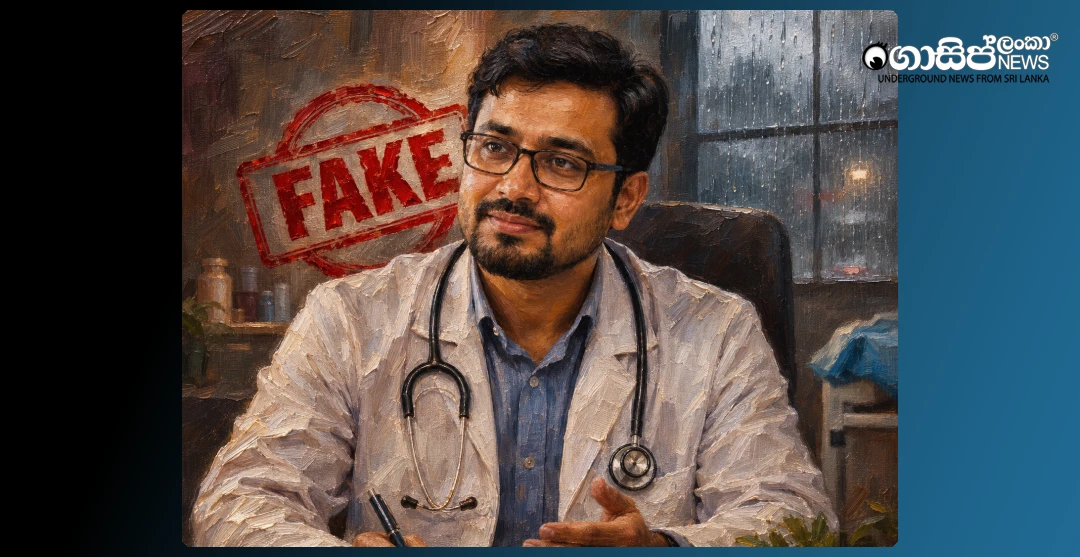
When treating a disease, quick recovery is expected from medicine. But if that medicine is given by a person without any medical qualifications, what will be the fate of the patient?
Dr. Ruwan Ferdinando, President of the Association of Community Medical Specialists, reveals that approximately 40,000 non-medical personnel are currently engaged in dispensing medicines in Sri Lanka.As the specialist doctor points out, among those who dispense medicines in this manner are individuals who have no medical qualifications whatsoever, and who provide medicines to patients based solely on knowledge gained from working in pharmacies. The most serious aspect of this situation is that they invariably dispense antibiotic drugs to patients.
Emphasizing that the dispensing of antibiotic drugs by unqualified individuals is a serious problem, Dr. Ruwan Ferdinando states that a broad discussion should take place in society regarding this issue. He points out that the use of antibiotic drugs in Sri Lanka is currently at a very high level, and their unnecessary use is leading to increased drug resistance in germs.
Some patients are inclined to use antibiotics even when they are not necessary, and the specialist doctor explains that this unnecessary use occurs in several main ways in this country. The first is patients taking antibiotic drugs for their illnesses at home. The second is patients themselves requesting antibiotics when they visit doctors.
He believes that some doctors also contribute to this problem. Dr. Ferdinando mentions that doctors often use antibiotics, especially in primary healthcare services, thinking that people will ask for them and that the disease will subside quickly if they are given.
He points out that the situation in other countries is very different, stating that antibiotic use cannot be done in those countries as it is here, and that obtaining an antibiotic drug even from a doctor is a very difficult task.
In this context, where about forty thousand non-medical personnel dispense medicines and antibiotic use has increased uncontrollably, Dr. Ruwan Ferdinando very simply yet sharply explained the risk that will have to be faced in the future.
"If this continues, in the future, as we say in Sinhala, medicines will stop working."