![Gossip Lanka News [English]](https://blogger.googleusercontent.com/img/a/AVvXsEhYm2aFFq-bIW1nWX-RrqnPFoIsVos6_VCVz8BpLt0QJi55GNXHXC2fugeRvL0qUStEuCfs7Sfu6ZiSlhrkldxfGuE_wzy5gitY6rMZ2KSi8VBbGvkgXLks37RwZV-4-HKbWiNLRxB8C_r1e4z3mpxFTMPDJPEADoG8E-bZteWFipeD5KNGbjvCfqEfKw=s300 "Gossip Lanka News [English]")
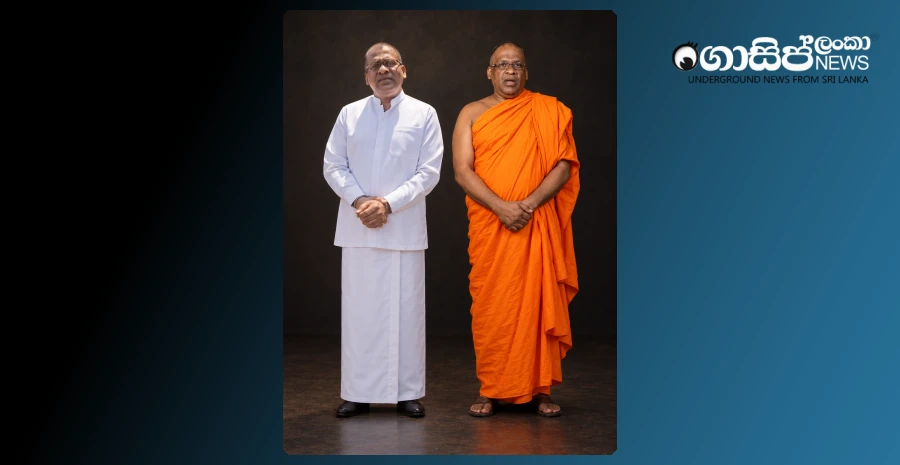
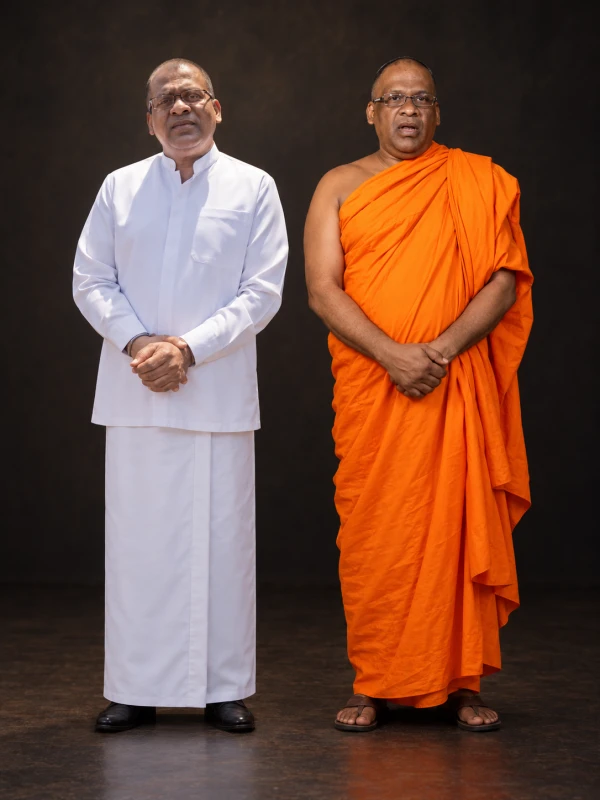
The news that drew the most attention today (06) was the appearance of Venerable Galagodaaththe Gnanasara Thero, the General Secretary of the Bodu Bala Sena organization, who is serving a prison sentence, before the Colombo High Court without his robes, dressed in a white long-sleeved shirt and a white sarong.
He was imprisoned yesterday (05) after the Court of Appeal ordered the re-implementation of the six-year prison sentence previously imposed for contempt of court. The head of the prison had stated yesterday that the monk's robes were removed and he was assigned to a regular prison ward.
Today, the monk was produced in court for another case filed by the Attorney General, accusing him of insulting Islam. This case has been filed based on an alleged statement made regarding the Holy Quran of Muslims. When the case was called on September 30, Gnanasara Thero did not appear in court, so the Colombo High Court issued a warrant for his arrest and production. Today was the first time he was produced in court in relation to this case since then. Colombo High Court Judge Buddhika C. Ragala ordered the case to be called again on October 23.
It is reported that Mr. Sanjaya Marambe, the lawyer appearing for Gnanasara Thero, objected to the removal of the robes, arguing that prison authorities do not have the power to remove the robes of a Buddhist monk. The judge stated that the defense has the opportunity to appeal to a higher court regarding this matter.
While being taken back to the prison bus amidst tight security, Gnanasara Thero answered questions from journalists, stating that although he had been imprisoned four or five times before, no government had ever removed his robes, but this time it happened. When asked if his robes were removed willingly, he said it was done on government orders.
"No government ever removed my robes. Even if the robes are removed, or if I stay like this, Gnanasara Thero is Gnanasara Thero," he said.
The monk further pointed out that it is the Maha Sangha Council that should decide whether he should be allowed to wear robes while imprisoned and when appearing in court. He added that he faced such situations due to his sacrifices for the country and that he is ready to accept whatever happens.
However, a debate has arisen on social media regarding his statement that "no government had previously removed his robes." The reason is that media reports from 2018 stated that he wore the ordinary prisoner's jumper even during his prison term in 2018.
On June 20, 2018, the then Minister of Justice and Prison Reforms, Ms. Thalatha Atukorale, stated that anyone convicted and sentenced to imprisonment by a court must wear the prescribed jumper under the Prisons Ordinance. Furthermore, in August 2018, while he was hospitalized for treatment, he was provided with the attire known as the "light jumper" or "liberty dress."
At that time, the spokesperson for the Prisons Department, Commissioner of Prisons Thushara Upuldeniya, told BBC Sinhala Service that Gnanasara Thero's robes had been removed and he was spending his time in prison in prisoner's attire. He also stated then that reports of him engaging in a hunger strike if his robes were removed were false, and that the monk had removed his robes without any protest.
Meanwhile, on June 19, 2018, there were 15 monks and three other religious priests imprisoned and wearing jumpers, and Gnanasara Thero was among them, according to Mr. U.R. de Silva, the then President of the Bar Association of Sri Lanka. He also emphasized then that it was not an offense under the law. Against this backdrop, some parties accuse Gnanasara Thero's statement today of being politically motivated.
When questioned about this at the cabinet decision briefing held today (06), Minister Dr. Nalintha Jayatissa stated that Gnanasara Thero has not been given any special treatment or discrimination, and that the Prisons Department has acted in accordance with the Prisons Ordinance.
"No special treatment has been given in this incident. Galagodaaththe Gnanasara Thero has been treated in the same way as the 63 monks currently imprisoned and serving sentences. This is not something done only for this monk," the Minister said.
However, protests have also arisen at a religious level regarding the removal of the robes. Venerable Kotapitiye Rahula Thero, the Anunayake and Chief Registrar of the Kotte Sri Kalyani Samagri Dharma Maha Sangha Council, sent a letter to the Commissioner General of Prisons, requesting that Gnanasara Thero be allowed to appear in robes both inside prison and whenever he is taken outside the prison.
The letter states that the full right to wear or remove robes belongs to the monk himself and the Maha Sangha Council to which he belongs, and that it is a monastic matter that must be done with the approval of the Mahanayake Thero of the respective Nikaya. Rahula Thero also pointed out that his Sangha Council has not been reported any serious reason, such as Gnanasara Thero being 'Parajika' (expelled from monkhood) according to the Vinaya Pitaka, or a reason serious enough to remove his robes. He further stated that disregarding this tradition would set a wrong precedent for the Sasana (Buddhist dispensation). The letter, which emphasized that they do not oppose the court's decision and accept the supremacy of the judiciary, also had copies sent to the President and the Commissioner of Buddhist Affairs.
Opposition Leader Sajith Premadasa also issued a statement regarding this matter. He states that while the judiciary operates within the legal framework, a government should act sensitively towards social traditions, conventions, and cultural identities.
The statement mentioned that he saw through the media that Gnanasara Thero was brought to court in lay attire without his consent, and that it is inappropriate to bring a monk or any other religious leader in lay attire without the knowledge of the relevant religious institution or without his consent. Therefore, the Opposition Leader emphasizes to the government that in such sensitive matters, action should be taken with the knowledge and approval of the Mahanayake Theros of the three Nikayas.
Meanwhile, the Prisons Media Spokesperson, Commissioner of Prisons Senaka Palllethanna, explaining the law regarding religious attire for imprisoned religious clergy, stated that religious attire is only permitted for minor sentences of less than two years without hard labor. For longer sentences, religious attire is not allowed, and there are already priests in the country's prisons whose religious attire has been removed, and they are taken outside the prison in what is known as the "liberty dress."
According to prison rules, remand prisoners can wear simple clothes of their choice, but the attire of convicted prisoners differs. Male prisoners serving ordinary sentences must wear the white shorts and short-sleeved shirt known as the jumper, while prisoners sentenced to death receive a checkered sarong and a short-sleeved shirt. Female prisoners are prescribed a white 'cheeththa' (a type of dress) or a plain white gown with a buttonless white short-sleeved blouse, while women sentenced to death receive a checkered 'cheeththa' or gown. The attire of prisoners whose appeals are pending is marked with "P.A." (Pending Appeal).
Accordingly, it has been clarified that Gnanasara Thero is entitled to this attire by law, and no evidence has been found that the government intervened to do anything in this regard.