
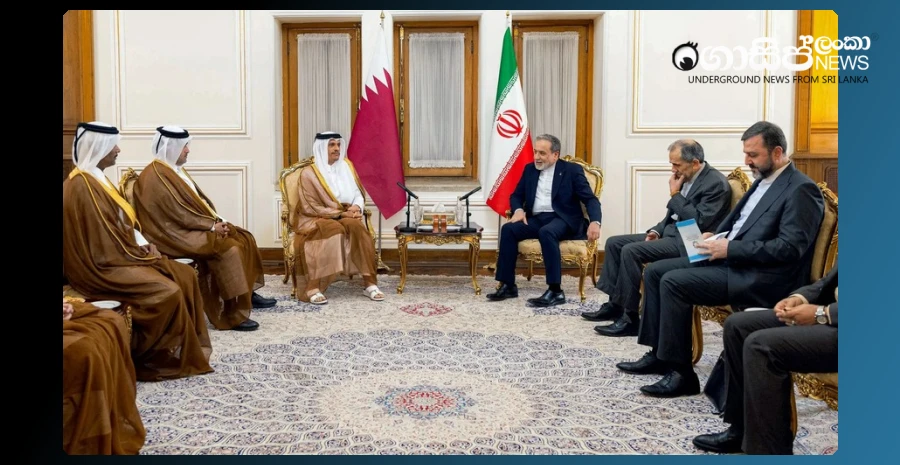
The State of Qatar has once again initiated diplomatic efforts as a mediating state between the United States and Iran, with the aim of reaching a peace agreement to end the conflict that has been active for the eighth month between the two parties. Despite media reports that American President Donald Trump has rejected claims that the US is ready to ease sanctions and release frozen funds in exchange for agreements to limit Iran's nuclear program, the State of Qatar expresses confidence that these discussions will yield successful results.
Majed Al Ansari, spokesperson for the Qatari Foreign Ministry, told the media that messages are being exchanged between the two parties with the aim of reaching a common understanding to protect against the adverse effects of the conflict. The State of Qatar, which supported the memorandum of understanding that led to a brief truce last June, also held separate discussions with American and Iranian officials on Monday, and it is unclear whether similar discussions took place on Tuesday. Although discussions intensified last week alongside the United Nations General Assembly meeting in New York, a final agreement has not yet been reached regarding the reopening of the Strait of Hormuz, which is strategically important for world trade. This prolonged conflict has severely damaged Iran's military power and economy, and in response, Iran has also launched missile and drone attacks on American-friendly targets in the Gulf region and restricted oil tanker traffic in the Strait of Hormuz, thereby contributing to rising global energy prices.
American President Donald Trump stated that Iran is in a very unsatisfactory state and that they will soon surrender. Trump, in a post on 'Truth Social', rejected media reports by Axios and CNN that sanctions would be eased if Iran showed progress in the nuclear field, stating that he had not given Iran any concessions. He pointed out that the main objectives of this war are to prevent Iran from acquiring a nuclear bomb, to stop attacks on neighboring countries, and to create a suitable environment for the Iranian people to overthrow their leadership. Iran, stating that it does not possess nuclear weapons and does not intend to produce such weapons, emphasizes its right to use nuclear energy for civilian purposes. Speaking on CBS's "Face the Nation" program, Iranian President Masoud Pezeshkian stated that Iran is ready for negotiations, even if it is not flexible in the face of pressure or threats. Although Iran's peace proposal at the United Nations General Assembly suggested a seven-day period to open the Strait of Hormuz and a ceasefire, President Trump rejected that proposal. However, Iranian Foreign Minister Abbas Araghchi stated that America has not officially communicated such a rejection through intermediaries.
This conflict has resulted in thousands of deaths and has severely impacted global energy supply and inflation. Saudi Arabia has also been increasingly drawn into this conflict as Houthi rebels in Yemen advance, defeating Saudi-backed government forces, and threats have emerged against Saudi oil exports through the Red Sea. Meanwhile, despite oil prices falling by 2.5 percent on Tuesday due to signs of normalization in Middle Eastern oil exports, there is a monthly upward trend in prices due to fears of supply disruptions. The American government has taken steps to lend up to 40 million barrels from the Strategic Petroleum Reserve to energy companies and has imposed new sanctions on 10 individuals and entities based in China, Hong Kong, and Pakistan for allegedly helping Iran acquire weapons and spare parts. It is also reported that Iranian women were seen walking past Iran-made 'Zulfiqar' missiles and a large photograph of Supreme Leader Mojtaba Khamenei displayed in Baharestan Square, Tehran, on September 28, 2026.