![Gossip Lanka News [English]](https://blogger.googleusercontent.com/img/a/AVvXsEhYm2aFFq-bIW1nWX-RrqnPFoIsVos6_VCVz8BpLt0QJi55GNXHXC2fugeRvL0qUStEuCfs7Sfu6ZiSlhrkldxfGuE_wzy5gitY6rMZ2KSi8VBbGvkgXLks37RwZV-4-HKbWiNLRxB8C_r1e4z3mpxFTMPDJPEADoG8E-bZteWFipeD5KNGbjvCfqEfKw=s300 "Gossip Lanka News [English]")
The Public Utilities Commission of Sri Lanka states that in the face of the El Niño weather conditions, electricity demand may increase in the future, and there is a high risk of hydropower generation falling due to the drying up of water sources. At a press conference held to announce new tariffs for purchasing electricity from renewable energy sources, the commission's director K.
P. L. Chandralal stated that in the face of such an environmental challenge, there might even be a need for future power cuts.To overcome the electricity shortage and energy crisis, steps have been taken to introduce higher purchase tariffs for renewable energy projects with battery energy storage systems. The authorities' target is to add at least 450 MW of capacity to the national grid through solar power and battery storage systems by March next year. This revised tariff scheme, effective from tomorrow, will be valid until February 24, 2027, and applies to renewable energy power plants, rooftop solar panel owners, and projects with battery energy storage systems.
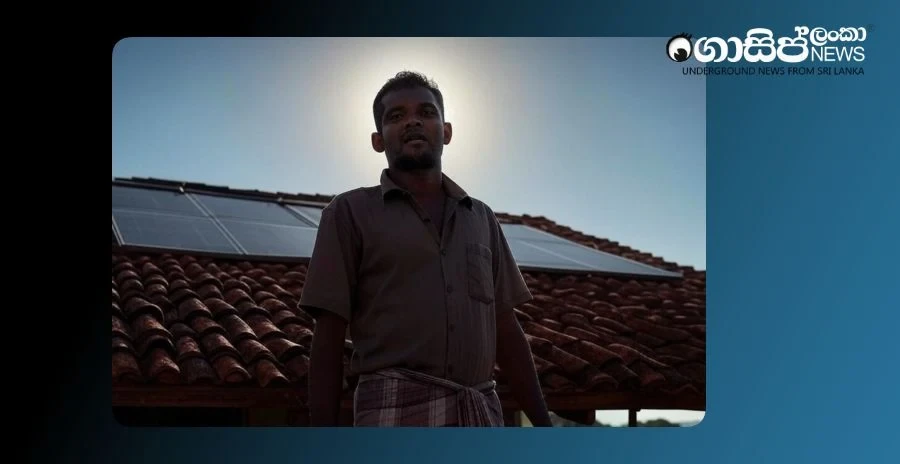
The National System Operator has been instructed to immediately secure the additional capacity required to ensure an uninterrupted power supply, thereby preventing the electricity capacity deficit projected to occur in the first quarter of 2027. Under the new tariff framework, rooftop solar power systems with battery storage facilities will receive a significantly higher payment during the priority period. Accordingly, systems ranging from 250 kW to 1,000 kW will be paid Rs. 45.53 per unit for the first 15 years, and systems over 1,000 kW will be paid Rs. 42.49 per unit during the priority period.
Additionally, separate attractive tariffs have been introduced for ground-mounted and floating solar power projects with battery storage to encourage developers. Furthermore, the commission has imposed a limit stating that the average monthly cost for the 160 MW battery storage capacity currently supplied to the system should not exceed Rs. 20 per kilowatt-hour. If this cost exceeds the Rs. 20 limit, the additional cost will not be allowed to be added to consumers' electricity bills.
For new rooftop solar panels without battery storage facilities, a tariff range has been set from Rs. 23.11 per unit for systems up to 10 kW, to Rs. 15.81 for systems over 250 kW. This revised tariff structure also includes small hydropower, wind, biomass, municipal solid waste, waste heat recovery, and floating solar power projects. This tariff formula has been approved under Section 29 of the Sri Lanka Electricity Act No. 36 of 2024, after soliciting public comments and analyzing stakeholder data, with the aim of storing renewable energy for use during periods of high demand.


